
Quick answer: Backlink gap analysis compares the websites or pages linking to competitors with those linking to your own site to identify missing link opportunities. It turns competitor backlink data into a shortlist of relevant prospects, using source relevance, linking context, and feasibility rather than raw link counts or authority scores alone.
Key facts
- Bing Webmaster Tools can compare your backlink profile with up to two other sites and filter for referring domains missing from yours. Backlinks – Bing Webmaster Tools
- Bing’s comparison uses the top 500 referring domains and anchor texts by backlink count, not a complete backlink profile. Backlinks – Bing Webmaster Tools
- PageRank remains part of Google’s core ranking systems, alongside other link-analysis systems. A Guide to Google Search Ranking Systems
- Google treats nofollow, sponsored, and ugc link attributes as ranking hints, not absolute exclusions. Evolving "nofollow" – new ways to identify the nature of links
TL;DR: Compare relevant competitors with your site, verify the missing referring domains, and prioritize sources where your content genuinely fits the linking context.
- Backlink gap
- A difference between competitors’ backlink sources and your own, indicating potential rather than guaranteed link opportunities.
- Referring domain
- A website domain containing at least one backlink to the site or page being analyzed.
- Link intersect
- A comparison that identifies backlink sources shared by selected competitors, optionally excluding sources already linking to you.
- Qualified link prospect
- A verified linking source with relevant context and a plausible editorial reason to reference your content.
What is backlink gap analysis?
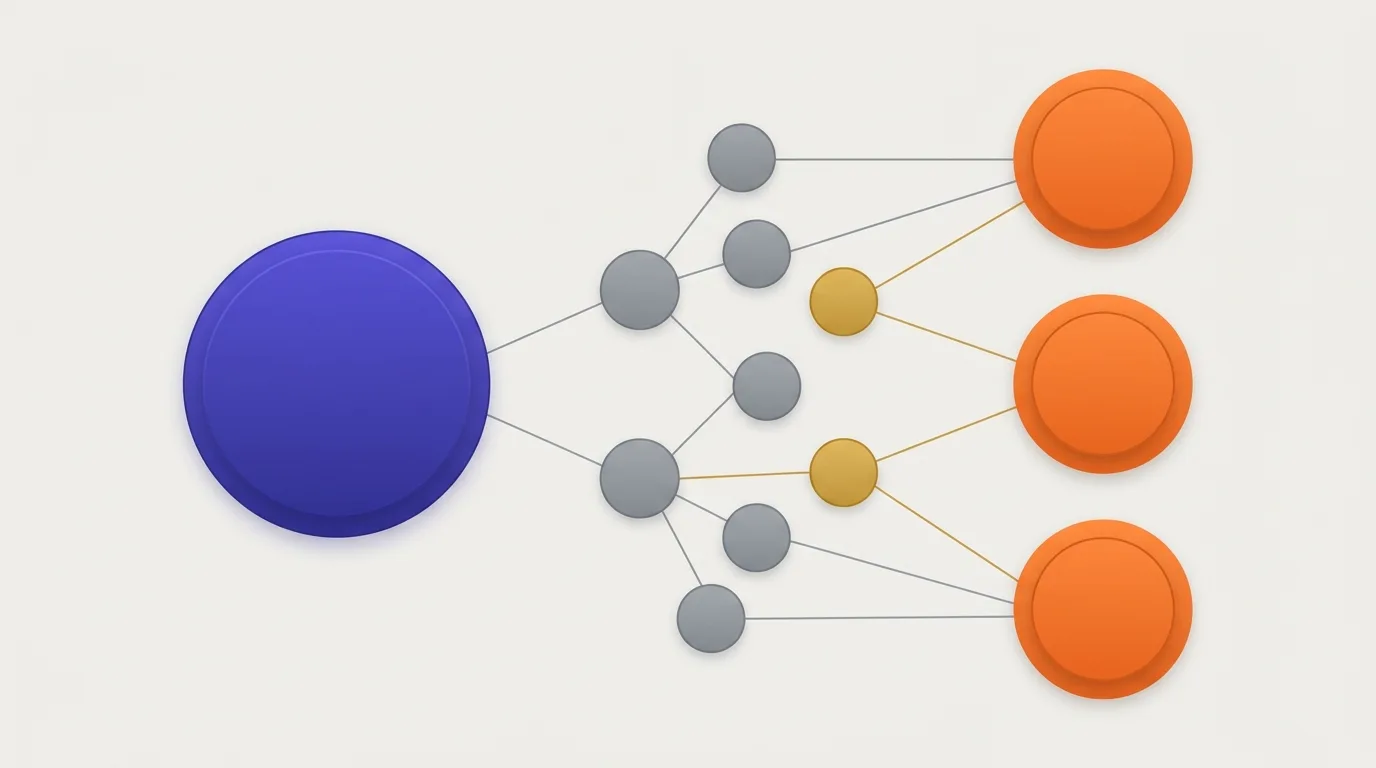
Backlink gap analysis compares the sets of websites or pages that link to competitors with those that link to your site. It identifies sources missing from your selected scope, then checks which may be suitable prospects. The goal is to evaluate potential sources, not subtract backlink totals or assume competitor links can be copied.
Backlinks are links from other websites to your content.
What counts as a missing source?
A missing source is a referring domain or referring page absent from the backlink set you chose to compare.
- Referring-domain gap: a website links to a competitor but not to your selected site or page; repeated links from that website do not create separate domain opportunities.
- Referring-page gap: a specific page links to a competitor but not to your selected destination, even if its domain already links to you elsewhere.
The deliverable is a validated, prioritized prospect list with evidence of each link, its context, why the source fits, and a suitable destination page on your site.
Unlike backlink gaps, keyword and content gaps identify missing search-query coverage or useful content, rather than missing external link sources.
Why do missing backlink sources matter?
Missing backlink sources are leads for finding publishers that already reference resources in your topic. They can reveal relevant publications, resource lists, and industry websites you have not considered. Competitor links show that a publisher chose to reference something; they do not prove that those links caused the competitor’s rankings.
Google uses link-analysis systems to understand page subjects and usefulness for a query, and PageRank remains part of its core ranking systems, according to Google Search Central. This makes links worth investigating, not the sole explanation for search performance.
What competitor sources can reveal
Referring pages show the context in which publishers choose to cite resources. Inspect the linked content to understand what earned the reference:
- Research: Does the publisher cite original evidence?
- Guides: Does the link help readers complete a task?
- Resource lists: Does the site collect useful industry references?
A source linking to several relevant competitors can be a useful discovery signal. Yet overlap alone does not establish editorial quality or show that the publisher would consider your resource.
Your SEO strategy should determine how much effort this research receives alongside other site needs.
Set the competitor set and comparison scope
This section defines which competitors and page scopes belong in your backlink comparison.
- Set the brief. Record the topic, audience, market, and intended destination page before collecting data. These inputs help you judge whether a source could plausibly link to your page.
- Choose search competitors. Use sites already identified in the relevant search results, not just businesses selling similar products. The broader discovery process belongs in SEO competitor analysis.
- Choose the comparison scope. Whole domains suit broad source discovery. Ranking URLs or relevant site sections suit a focused content opportunity, such as finding publishers that reference guides on your topic.
- Match and record the scope. Compare like with like: domains with domains, or focused pages with focused pages. Explicitly record whether each input covers a domain, subdomain, section, or exact URL, plus the export date.
- Collect the required fields. Use backlink tools to gather source domains, linking pages, target pages, and anchor text.
Exclude misleading scope. An unrelated division of a large competitor may attract sources with no interest in your topic. A mismatched regional site may surface publishers serving another language or market. Narrow these inputs before treating their sources as prospects.
How do you find domains linking to competitors but not you?
Enter your target site and selected competitors into a backlink comparison tool, using matching scopes. Find referring domains that link to competitors but not your target, then export the results. Start with all missing sources and use competitor overlap to organize the list for review.
- Run the comparison. Ahrefs Link Intersect and Semrush Backlink Gap suit this task. Match domain-level or page-level scope to your brief.
- Start broad. Include sources linking to any selected competitor. Flag those linking to several competitors for grouped review; overlap alone does not establish quality.
- Export and consolidate. Deduplicate referring domains while keeping representative referring-page URLs, anchors, and competitor destination URLs for validation. Without an intersect feature, compare exports manually and remove domains present in your target’s dataset.
Example of source overlap
This hypothetical comparison shows presence or absence within a chosen dataset.
| Publisher domain | Target | Competitor A | Competitor B |
|---|---|---|---|
| journal.example | Absent | Present | Present |
| directory.example | Absent | Present | Absent |
| news.example | Present | Present | Present |
Alternative data and limits
Bing Webmaster Tools offers comparison with up to two other sites and filters for referring domains missing from your site (Bing Webmaster Tools). Its comparison uses the top 500 referring domains and anchor texts by backlink count, not a complete profile (Bing Webmaster Tools).
Missing means absent from the chosen dataset and scope, not proven absent across the web. Broader backlink-data checks belong in an off-page and backlink audit.
Validate and prioritize the missing sources
Validation checks whether missing sources are relevant, current, and realistic prospects for your site.
Review each source
- Open the source page and confirm the competitor link remains. Inspect its surrounding content, anchor text, destination, placement, and attributes. Google treats nofollow, sponsored, and ugc as ranking hints, not absolute exclusions (Google).
- Check whether the source already links to you outside the report’s scope or added a link since export.
- Prioritize niche and audience relevance, genuine editorial context, destination fit, and a plausible inclusion reason. Treat competitor overlap as secondary. Resource pages, editorial articles, and relevant directories need individual review.
Assign a review bucket
Review buckets record decisions with written reasons, not numerical formulas. Domain Authority (DA), Domain Rating (DR), Authority Score, and traffic estimates are third-party screening aids—not Google metrics or proof of value.
- High: Relevant context and a compelling destination.
- Medium: Plausible fit; needs verification or a distinctive resource.
- Reject: Irrelevant audience or no credible inclusion reason.
Prospect-sheet fields: referring domain, source URL, competitor destination, overlap, linking context, attributes, proposed destination, inclusion rationale, priority, status, and last-checked date.
Google recommends distinctive, compelling content worth referencing (Google); if that resource is missing, use content-led link building before proceeding.
For outreach execution, see backlinks and link building.
Common mistakes that turn gaps into bad prospects
This section covers mistakes that turn a backlink gap analysis into a list of unsuitable prospects.
- Treating gaps as targets. A missing domain is a lead, not a link you must acquire. Chasing raw backlink totals can distract from relevant sources with a clear reason to reference your page. Do not copy competitor anchor text; wording should fit the source context.
- Copying questionable placements. Reject irrelevant, scraped, paid-for-ranking, or otherwise manipulative placements based on visible context, not competitor participation. Google defines link spam as links created mainly to manipulate rankings (Google Search Central); see link-spam policy, paid-link qualification, and disavow guidance.
- Using a binary value filter. Google treats nofollow, sponsored, and ugc attributes as ranking hints, so “passes value versus worthless” is misleading (Google Search Central).
- Mixing mentions with links. An unlinked brand mention is not a backlink row; handle mention discovery through brand mention research.
- Treating alerts as verdicts. A link-growth spike alone does not establish manipulation, and a proprietary toxicity label is not a Google penalty. Inspect the actual placements; steady acquisition does not prove that links are legitimate.
Check progress and refresh the gap
This section covers how to track backlink gap analysis outcomes and refresh the comparison without confusing data changes with progress.
- Save the baseline. Record the comparison scope, competitor set, data provider, and export date so later reviews use consistent inputs.
- Maintain an outcome log. Track validated prospects, rejected sources with reasons, newly earned relevant referring domains, and links later lost. Compare changes over time; focus on verified outcomes, not a smooth growth curve.
- Verify new links. Open live referring pages to confirm each link and its destination. A tool’s discovery date alone does not establish when a link appeared.
- Explain each apparent closure. Check whether you earned a relevant link, a competitor lost theirs, the scope changed, or tool coverage shifted.
- Refresh when inputs change. Rerun the comparison when content, competitors, or the prospect pipeline changes rather than following a universal schedule.
Referral visits are a possible benefit, not an assured result of high estimated source-site traffic. Treat these visits and relevant landing-page search performance as context, not proof of backlink impact.
SEO KPIs guide broader metric selection.
SEO ROI and attribution explains why assigning improvement to a particular backlink is difficult.
Frequently asked questions
Can a brand-new website with no backlinks run a backlink gap analysis?
A backlink gap analysis compares competitors’ link sources with your own, so an empty backlink profile can still provide a starting point. Treat the missing sources as research leads, not a checklist to copy. Review which sites cover your topic, serve your audience, and have a clear editorial reason to reference content you could create.
What should I do if the only missing sources are competitors’ own websites or exclusive partners?
Competitor-owned sites and exclusive partners are usually restricted opportunities, not gaps you need to close. Mark them as unavailable and remove them from your outreach shortlist. If nothing remains, broaden your comparison to other sites competing for the same searches. Look for independent publishers with a relevant audience, rather than trying to reproduce relationships you cannot access.
How should I compare competitors whose websites use different languages?
A cross-language backlink comparison is a review of link sources across language markets. Group competitors by the language and audience they serve before judging gaps. Check each source’s topic, readership, and reason for linking. Treat sources outside your target market as a separate research list, and prioritize those whose readers could use your content.
How many backlinks do I need to outrank a competitor?
A backlink count is a comparison metric, not a target that determines who ranks higher. Google uses link-analysis systems to understand page subjects and usefulness for a query, not just raw totals, as its ranking systems guide explains. Use the gap to find relevant opportunities, while also assessing how well your page answers the searcher’s need.