
Quick answer: Link building with content is the practice of creating useful resources that other websites choose to cite with backlinks. It combines a clear reason to reference an asset, credible information or functionality, and targeted outreach to relevant publishers. The goal is to earn editorial links, not buy placements or require attribution links.
Key facts
- Google uses link-analysis systems, including PageRank, as part of its core ranking systems. A guide to Google Search ranking systems
- Useful tutorials, practical tools, surveys and original research can earn merit-based links. Quality links to your site
- Original information and substantial added value matter more than rewriting existing sources. Creating helpful, reliable, people-first content
- Requiring backlinks without allowing publishers to qualify them can constitute link spam. Spam policies for Google web search
TL;DR: Create a credible resource that solves a specific publisher’s citation need, introduce it to relevant editors, and measure the editorial links and useful visits it earns.
- Linkable asset
- A resource with information or functionality that gives another publisher a concrete reason to reference it.
- Editorial link
- A link a publisher independently chooses to include because it helps readers.
- Citation need
- A gap in an article or resource that an external source can fill with evidence, explanation or a useful tool.
- Referring domain
- A distinct website domain containing a link to the asset being measured.
What is link building with content?
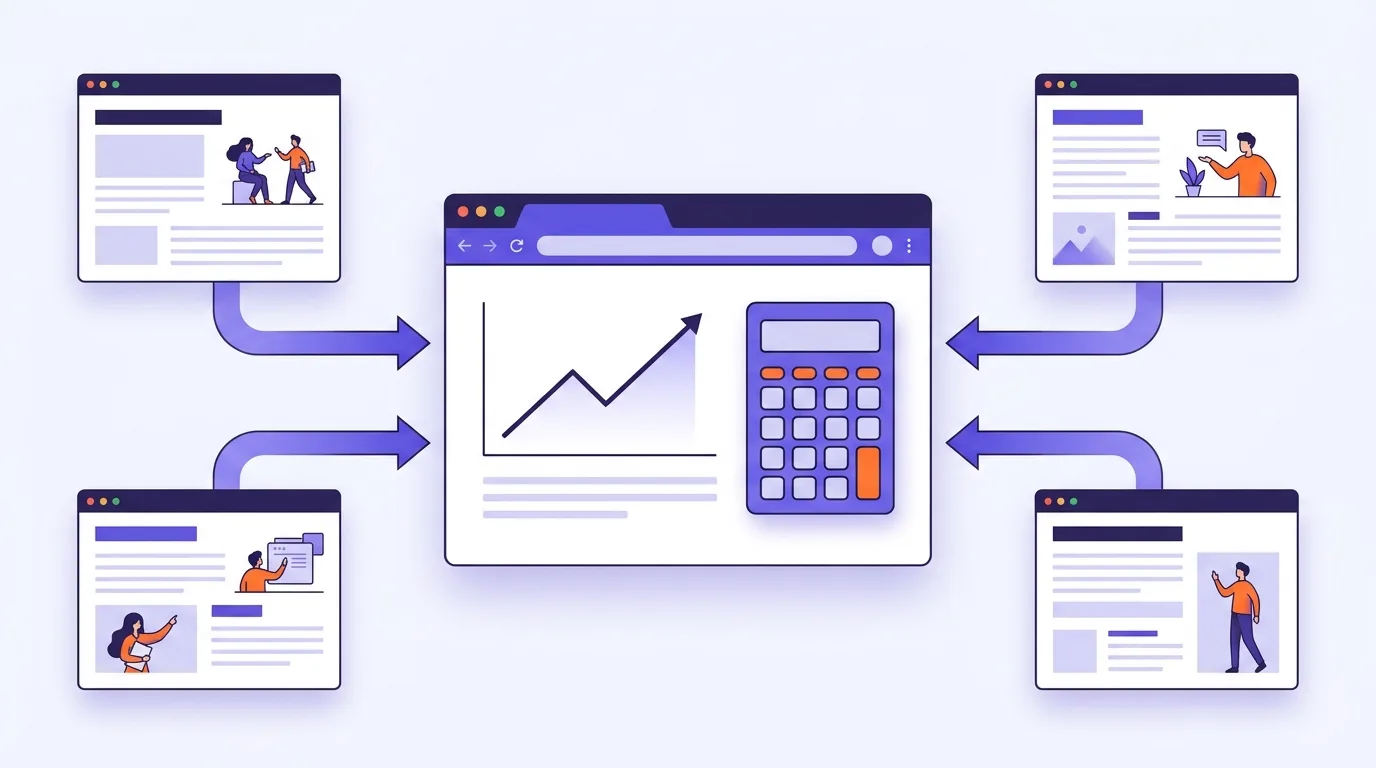
Link building with content means earning links by making resources worth citing and helping the right publishers find them. You give readers something useful. Publishers then decide whether and how to link to it.
Backlinks are links from other websites to yours; editorial backlinks reflect a publisher’s choice to reference your work.
Google names several types of useful content that can earn links on merit:
- Tutorials that explain a task.
- Tools that solve a problem.
- Surveys that address audience needs.
- Original research.
See Google’s advice on earning quality links.
A linkable asset needs to serve both the reader and the publisher. The reader might need help with a task, while the publisher needs a sound source to support an article. Useful content alone isn’t enough: publishers still have to find it and see a reason to cite it.
Why can useful content earn links that matter?
Useful content can earn editorial backlinks because it gives publishers something their readers need. A study may support a claim. A tool may help readers do something the article explains but can’t do for them.
The publisher needs a reason to cite the resource, not just a reason to like it. A link should add value to the page where it appears. It may then send interested readers to your site.
Google uses link-analysis systems to assess how pages relate to each other and how useful they are for a search. PageRank remains part of its core ranking systems, as explained in Google’s ranking systems guide. Links are part of a broader system, not a promise of higher rankings.
Focus on the audience and the context of each link, rather than a domain score or total link count. A citation from a well-known publisher doesn’t prove that every claim on your page is sound.
Choose business measures through your SEO KPIs, rather than treating earned links alone as proof of business value.
Choose an asset around a real citation need
Start with articles your audience reads. Look for a gap that you can fill with a resource you can build and maintain.
Say you sell office furniture and want to survey buyers about desk setup problems. Read the articles that cover desk choice first. Find the questions they leave open before you write your survey.
| What the publisher needs | What you could build |
|---|---|
| Evidence for an industry trend | Original research |
| A way to work out a cost | A calculator |
| Help with a hard task | A tested tutorial |
| Facts spread across many sources | A well-sourced reference page |
See content formats for more options.
Before you commit, check:
- Who needs the resource, and why would they cite it?
- What can you add that existing pages lack?
- Can you get sound evidence or test the tool?
- Do you have the skills and time to build it?
- Who will keep it accurate?
For a survey, you’ll need access to suitable respondents and a clear plan for analysing their answers.
Competing pages with links can signal demand, but they aren’t a template to copy. Use Backlink Gap Analysis to research those pages. Improve the evidence or make the resource easier to use; don’t just make it longer. Google recommends original work and substantial added value rather than rewrites of other sources in its helpful content guidance.
Choose an infographic only when it makes useful evidence easier to grasp. Good design alone isn’t a reason to cite it.
Build a resource publishers can confidently cite
Show where the evidence comes from
For research, explain how you collected the data and what it can tell readers. Keep observed findings separate from your conclusions. Link to the original sources you use.
A survey page should state:
- Who took part and how you recruited them.
- When you collected the answers.
- What questions you asked.
- How you analysed the answers.
- Where the findings may not apply.
If your survey covers only your own customers, say so. Don’t present their answers as the views of all buyers.
Explain how the resource works
For a tool, show what users need to enter and how the tool uses those inputs. A cost calculator should make its assumptions clear so readers know what the estimate leaves out.
For a tutorial, explain how you tested the steps and where they apply. If the task depends on a certain product version, state that near the instructions.
Make the useful part easy to find
Put the main finding or purpose near the top. Keep the supporting evidence close by, with a clear page URL that publishers can cite.
For a survey, place the method beside the findings rather than hiding it in a download. Offer a chart if it makes the results clearer. Share aggregate data only when it’s appropriate to do so.
Set clear reuse terms
If you offer charts or images, explain how others may use them. You can suggest a credit, but don’t force a backlink that the publisher can’t qualify. Google lists that arrangement as link spam in its required-link rules.
Content optimization covers broader ways to make a page useful and easy to read.
Content freshness and updates covers how to keep resources useful. An update isn’t a promise of new links.
How do you introduce the asset to relevant publishers?
Contact publishers whose pages could use your resource. Choose them because you can name a clear use for the asset, not because their sites pass a domain-score threshold.
Build an asset-specific prospect list
Save each relevant article and explain the gap your resource fills. Include resource roundups when they’re a good fit. Find the person who edits the page, so your pitch reaches someone who can assess it.
Send a concise, evidence-led pitch
Point to the article you’ve read and explain what your resource adds. Share the source URL, then leave the choice to the editor.
For the desk survey, you could write: “Your desk-buying article covers setup problems. Our customer survey found [finding]. The question wording and full results are at [source URL], so you can check whether it’s useful for your piece.” Use that wording only when it describes research you’ve actually done.
Don’t use fake personal touches or keep pressing for a reply. Offer a useful source, not a favour in return for a ranking link; those exchanges breach Google’s link-spam policies.
Don’t demand exact-match anchor text. Google recommends clear, concise wording that fits both pages, without keyword stuffing, in its link guidance.
Content promotion and distribution covers broader ways to share your work.
Digital PR covers work with journalists and media campaigns.
Common mistakes that undermine content-led link building
- No clear publisher need. A popular topic isn’t enough. Know who could use your resource and where it would fit.
- Rewritten research. A summary gives publishers little reason to cite you instead of the source. Google’s helpful content guidance asks for original work and substantial added value.
- Hidden methods. If readers can’t check how you reached a finding, they may not trust it. Make the method easy to find.
- Polish without substance. A longer page or a decorative chart can’t replace useful evidence. More outreach won’t fix that gap.
Reject promises of a fixed backlink count. An earned link is the publisher’s choice, and contributing an article doesn’t entitle you to one.
Useful guest articles aren’t the same as large-scale campaigns built mainly to gain links, which breach Google’s article guidance. For the detailed policy discussion, see Link Spam, Penalties and Disavow.
Content syndication republishes material elsewhere; it isn’t the same as earning an independent citation.
How do you measure results and improve the asset?
Track the links each asset earns and the visits they send. Then look at whether those visitors take actions that matter to your business. Search performance adds context, but it doesn’t prove the effect of a link.
Record your starting point
Before outreach, record the sites already linking to the asset and its referral traffic. Save the dates when you publish or make major changes, along with the dates you contact publishers.
Check new links
Use a backlink tool such as Ahrefs or Semrush to find links, then inspect the key pages yourself. Tools can miss links, and their indexes may differ. Check whether each link fits the page and serves its readers.
Keep a report for each asset with these fields:
- The asset’s URL.
- The page that links to it.
- When you first found the link.
- Where the link sits and why it’s there.
- The referral visits you can track.
- The useful actions those visitors take.
Watch search clicks and impressions, but don’t assign each change to a new link. Ask publishers what was unclear or missing. If feedback points to weak evidence, fix it before you send more pitches. Update the facts, not just the date.
For analytics setup, see Google Analytics 4. Use measuring content performance for broader assessment, and SEO ROI and attribution for how to assign credit.
Frequently asked questions
Can a small business earn content links without funding original research?
Yes. A tested tutorial or a useful tool can give publishers a reason to link. Google includes both in its advice on earning links. Use what you know firsthand to explain a task that existing pages don’t cover well.
Should a linkable resource be gated behind an email signup?
Keep the main resource public so publishers can check it and send readers straight to it. If you need to collect email addresses, offer an optional download. The public page should still be useful without a signup, not just a preview.
How long should you wait before deciding an asset is not earning links?
There’s no fixed deadline that suits every asset. Check whether suitable publishers saw it and what they said about it. If few people found it, improve how you share it. If readers saw it but found little value, revise the resource before spending more time on outreach.
Can a commercial product page work as a linkable asset?
Yes, if it offers something worth citing beyond the sales pitch. Clear compatibility details or a useful selection tool may give a publisher that reason. Keep the information easy to access, and separate factual guidance from sales claims.