
Quick answer: Off-page SEO is work beyond your website that supports discovery, reputation, and search visibility. Link building is the part focused on earning links from other websites. A sound approach combines useful resources, relevant promotion, and credible relationships while distinguishing links used in ranking from activities that primarily generate awareness or referral traffic.
Key facts
- A backlink connects a page on another website to a page on yours. Links report
- PageRank remains part of Google’s core ranking systems. A guide to Google Search ranking systems
- Google recommends social promotion, community engagement, and word of mouth for content discovery. Search Engine Optimization (SEO) Starter Guide
- Creating links primarily to manipulate search rankings is link spam. Spam policies for Google web search
- Search Console’s Links report is a sample, not a complete backlink inventory. Links report
TL;DR: Choose off-page activities that put useful work in front of relevant audiences, earn legitimate third-party recognition, and measure business outcomes rather than chasing link volume.
- Off-page SEO
- Activities beyond your website intended to support its discovery, reputation, and organic search visibility.
- Link building
- The practice of earning or securing links from other websites, ideally because the linked resource benefits their readers.
- Backlink
- A link from a page on another website to a page on your website.
- Referral traffic
- Visits that arrive through links on other websites rather than through search results.
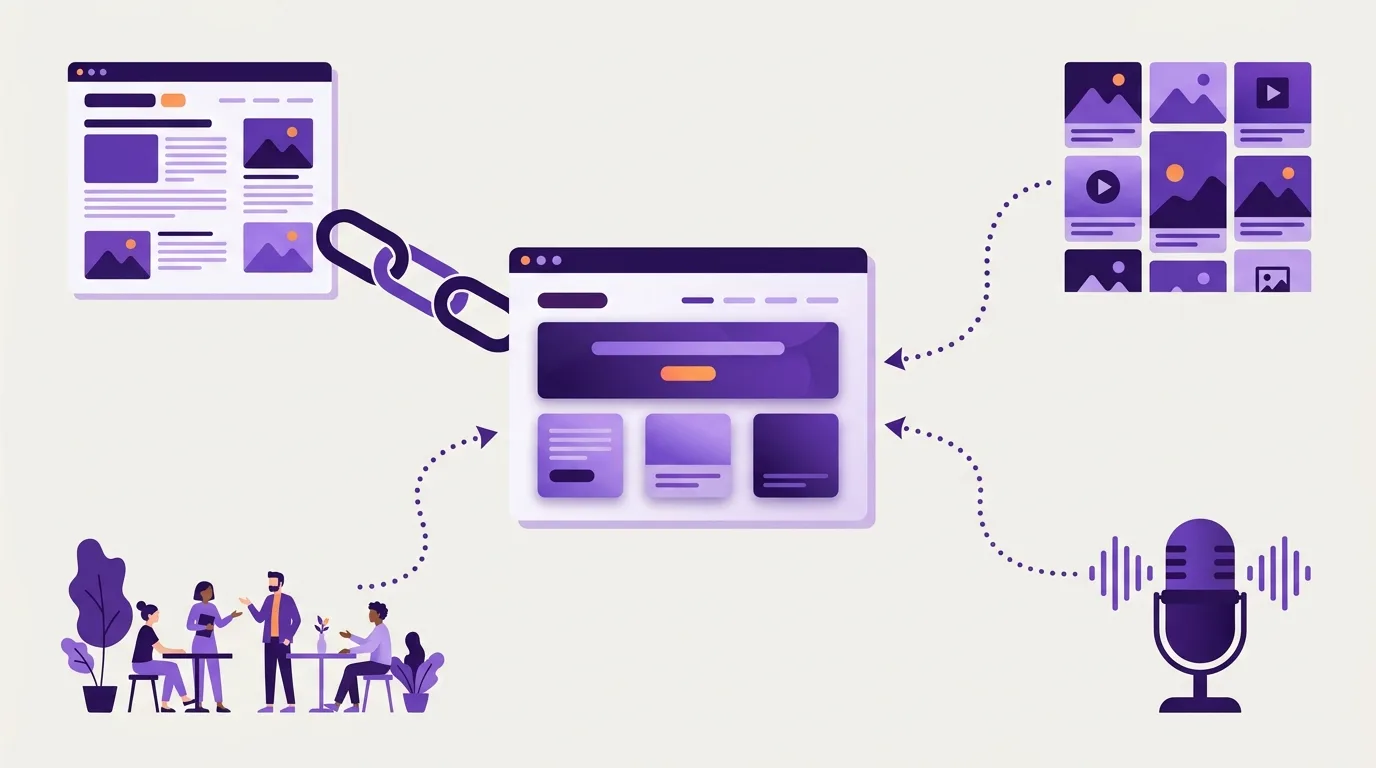
What is off-page SEO, and where does link building fit?
Off-page SEO is work outside your website that helps people find and assess your business. Link building is one part of that work: earning links from other websites. Neither requires buying placements. A mention can bring visitors or build trust without affecting your search rankings.
A backlink is a link from a page on another website to a page on your site, as defined in Google Search Console Help. For help judging link opportunities, see the off-page SEO and link building guide.
On-page SEO covers changes within your website. You still need those changes when you promote your site elsewhere. Before you spend time on an external channel, decide what you want it to achieve.
A framework for external activity
- Choose channels where your intended audience spends time.
- Name the outcome. A referral visit isn’t the same as a link.
- Set safe priorities. Make useful contributions rather than create links to influence rankings.
- Check what happened. Judge each activity against its purpose, not just the number of links it earned.
Why do external links and recognition matter?
A link can help Google understand a page and send readers to it. Coverage without a link can still help people judge your business. These benefits overlap, but you shouldn’t count them as the same result.
Link-based search signals
Google uses link analysis to understand how pages relate to each other and how useful they may be for a search. PageRank remains part of its core ranking systems, according to Google Search Central. That doesn’t make every link equally valuable. You can’t predict a ranking increase from a new backlink alone.
Audience discovery and referral visits
People may find your content through a shared link before they find it in search. Google’s SEO Starter Guide recommends social promotion and community engagement, as well as word of mouth, to help people discover content. That advice doesn’t establish likes or shares as direct ranking signals.
Reputation and audience trust
Relevant coverage can give people more context about your business. Track brand mentions without assuming they pass link-based ranking credit. Use online reputation management to keep track of feedback and respond when needed.
E-E-A-T isn’t a score that links raise. Google says it isn’t a specific ranking factor, though its systems use many factors to identify helpful, trustworthy content. See Google’s helpful content guidance for that distinction.
Build a focused off-page plan
Your plan should make it clear who you’re trying to reach and why they would care. It should also name the person doing the work and the evidence you’ll check afterward.
- Define the audience and outcome. Be specific about who you want to reach. Decide whether the main goal is referral visits or another outcome, such as relevant coverage.
- Choose something worth sharing. Use a resource that answers a real question. Link building with content explains how useful material can earn editorial references.
- Pick a channel that fits. Choose it for its audience, not a promised link count.
- Assign an owner. Someone needs time to make the contribution and handle replies.
- Set a baseline. Record the current state of the metric you plan to check. For a referral campaign, that might be visits and enquiries from the chosen source.
A usable campaign plan
Say you sell office furniture and have a desk-sizing guide. You want to reach people setting up a home office, so a community where members ask about small workspaces may fit better than a general business publication. Ask the moderators whether sharing the guide would be useful, rather than posting a link without context.
A short campaign record could look like this:
- Audience: people choosing a desk for a small home office.
- Resource: your desk-sizing guide.
- Channel: a relevant home-office community, subject to its posting rules.
- Owner: the person who maintains the guide and can answer sizing questions.
- Intended outcome: relevant visits to the guide.
- Follow-up check: compare referral visits with the baseline, then check whether those visitors viewed products or sent enquiries. Record useful feedback separately.
If you have original research with a clear news angle, Digital PR may be a better fit. Press-release distribution alone isn’t evidence of ranking value.
Use Backlink gap analysis to find sites worth investigating. A competitor’s link doesn’t make a placement worth copying.
Choose audience channels beyond publisher outreach
If your product needs a visual demonstration, a creator who already teaches your audience may be a better fit than a broad press pitch. If buyers need detailed answers before they choose, a specialist community may be more useful. The choice depends on where those people ask questions and whether you can contribute there.
Start with a channel you can support well. A forum account won’t do much for you if you only appear to post links, and a podcast pitch needs a topic listeners would care about.
- Social media and SEO: use social posts when you can reach people likely to use or share the resource. Don’t treat engagement counts as ranking signals.
- Influencer marketing: consider a creator when their audience fits your offer and their format can explain it well. Handle paid relationships as paid promotion.
- Forums and communities: join where you can answer real questions. Follow the rules and share a link only when it serves the discussion.
- Podcasts and webinars: choose an appearance when you have a topic worth teaching. Ask about the audience before committing time.
Apply the distinction between discovery and link value set out above.
Avoid shortcuts that confuse promotion with manipulation
The key boundary is purpose: are you reaching people with useful work, or creating links mainly to influence rankings? Google defines the latter as link spam in its spam policies.
Reject links sold for ranking credit
Buying links for ranking purposes is one example Google names. Its policies also cover excessive link exchanges and automated link creation. Ask why a publisher would link to your page and whether its readers would benefit. A high link count doesn’t answer either question.
Keep paid promotion separate
Advertising can be a valid way to reach an audience. It isn’t the same as buying ranking influence. Google’s link guidance prefers rel=”sponsored” for paid links, though rel=”nofollow” is also acceptable. For links in user-generated content, such as forum posts, Google recommends rel=”ugc”. The Outbound links entry explains how publishers should mark these links.
Don’t treat disavow as routine cleanup
A strange link in a report isn’t, by itself, a reason to disavow it. Google’s disavow guidance says most sites don’t need the tool. It recommends using it only when a considerable number of spammy or artificial links have caused, or are likely to cause, a manual action. Link spam, penalties and disavow covers how to assess that risk.
How should you check off-page SEO progress?
Start with the outcome you chose in your plan. Coverage and links show what was published; referral visits show whether people followed a link. If those visits lead to enquiries or sales, record that too. Review search visibility separately, because a ranking change doesn’t prove that a placement caused it.
Keep an evidence-based campaign record
Use the campaign record above as your starting point. After publication, add the live page URL and check whether it includes a link. Record what you can observe rather than filling gaps with assumptions.
- Does the page reach the audience you intended?
- Does the surrounding text explain your resource accurately?
- Did you receive referral visits from the placement?
- Did those visits lead to useful actions on your site?
- Did replies reveal questions your resource still needs to answer?
Use those findings to decide whether to return to the channel. Raw backlink totals and third-party authority scores can’t show business value on their own.
Use reports within their limits
Search Console’s Links report is a sample, not a full list of backlinks. Each table is limited to 1,000 rows. The report doesn’t show whether a link is marked nofollow, according to Google Search Console Help. Check the linking page when that detail matters.
Google Search Console explains how to use the reports and where their limits apply. For a wider review of existing links, use Off-Page and Backlink Audit.
If you’re unsure what to track, SEO KPIs and Metrics explains how to connect search measures with business goals.
Frequently asked questions
Can a small business start off-page SEO without a paid outreach budget?
Yes. You can answer questions in a relevant community or share a useful resource through channels you already use. Google’s SEO Starter Guide supports community engagement and social promotion as ways to aid discovery. Choose a channel you have time to maintain; no media spend doesn’t mean no cost.
How long does off-page SEO take to show results?
There’s no reliable timetable for an individual business. A placement may send referral visits before you see any change in search visibility, and it may have no clear ranking effect. Check progress against your chosen outcome rather than setting a deadline for rankings to rise.
Should a local business start with local visibility or broader link building?
If customers need to be nearby to use your service, local visibility should usually come first. Use the local SEO reference to plan that work. Broader outreach makes sense when it reaches people you can actually serve, not just when it offers a chance to earn a link.
Can strong off-page SEO compensate for an unhelpful website?
No. Promotion can bring people to your site, but it can’t answer questions your pages leave open. Google uses link analysis as part of its ranking systems, not as the whole system: see its ranking systems guide. Fix unclear service pages or difficult navigation before spending more time on outreach.
Entries in this chapter
- Backlinks and Link Building — Earn relevant, editorially chosen backlinks to useful pages, then evaluate their quality, referral value, and associated search performance rather than chasing link counts.
- Link Building with Content — Create a credible resource that solves a specific publisher’s citation need, introduce it to relevant editors, and measure the editorial links and useful visits it earns.
- Digital PR, Press Releases and Media Coverage — Build a verifiable, audience-relevant story, pitch suitable journalists, use releases for genuine announcements, and measure independent coverage and business outcomes rather than distribution counts.
- Brand Mentions and Linkless Mentions — Find and verify relevant brand mentions, request links only when they help readers, and report discovery and outreach outcomes without claiming that mention counts cause rankings.
- Social Media and SEO — Use social media to help relevant people discover useful content, then measure social referrals and search visibility separately rather than treating engagement as a ranking shortcut.
- Online Reputation Management — Audit what people find about your brand, resolve the underlying problems, publish verifiable corrections, and measure outcomes rather than promising to bury criticism.
- Influencer Marketing — Choose creators for audience fit, brief them for useful and transparent content, qualify compensated links, and judge the partnership by business outcomes rather than promised ranking gains.
- Forums and Communities — Participate consistently in relevant, well-moderated communities with useful standalone answers, and judge success by qualified visits and helpful interactions rather than links posted.
- Podcasts and Webinars — Choose audience-relevant appearances, contribute useful expertise, offer a genuinely helpful destination for listeners, and measure editorial links and qualified visits rather than promising ranking gains.
- Link Spam, Penalties and Disavow — Check for a manual action and evidence of manipulative linking before taking corrective action, and reserve disavow for serious unnatural-backlink problems rather than routine cleanup.
Off-Page SEO and Link Building — frequently asked questions