
Updated November 3, 2026 · By RAMRAD · Reviewed by Robin Rad
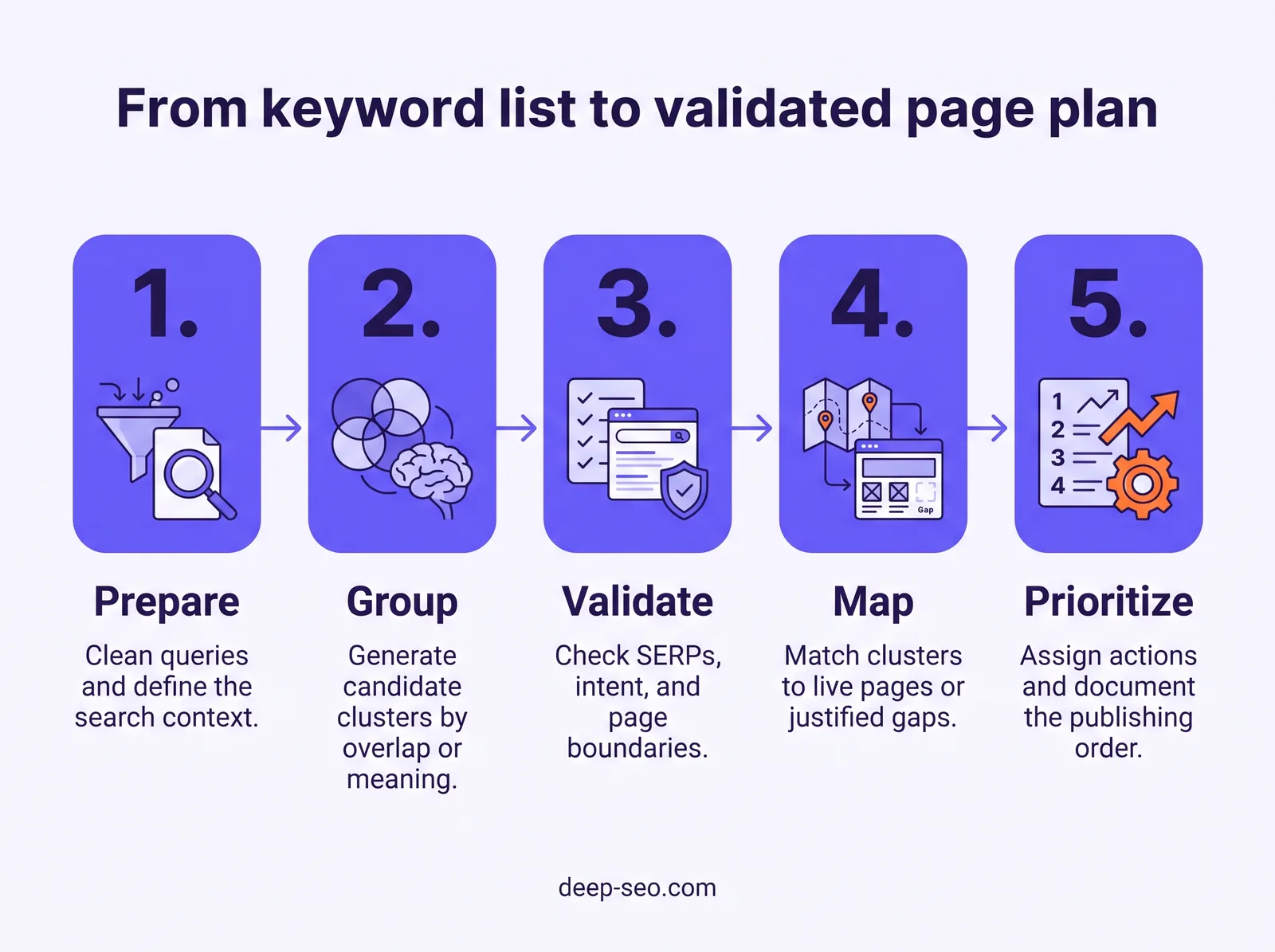
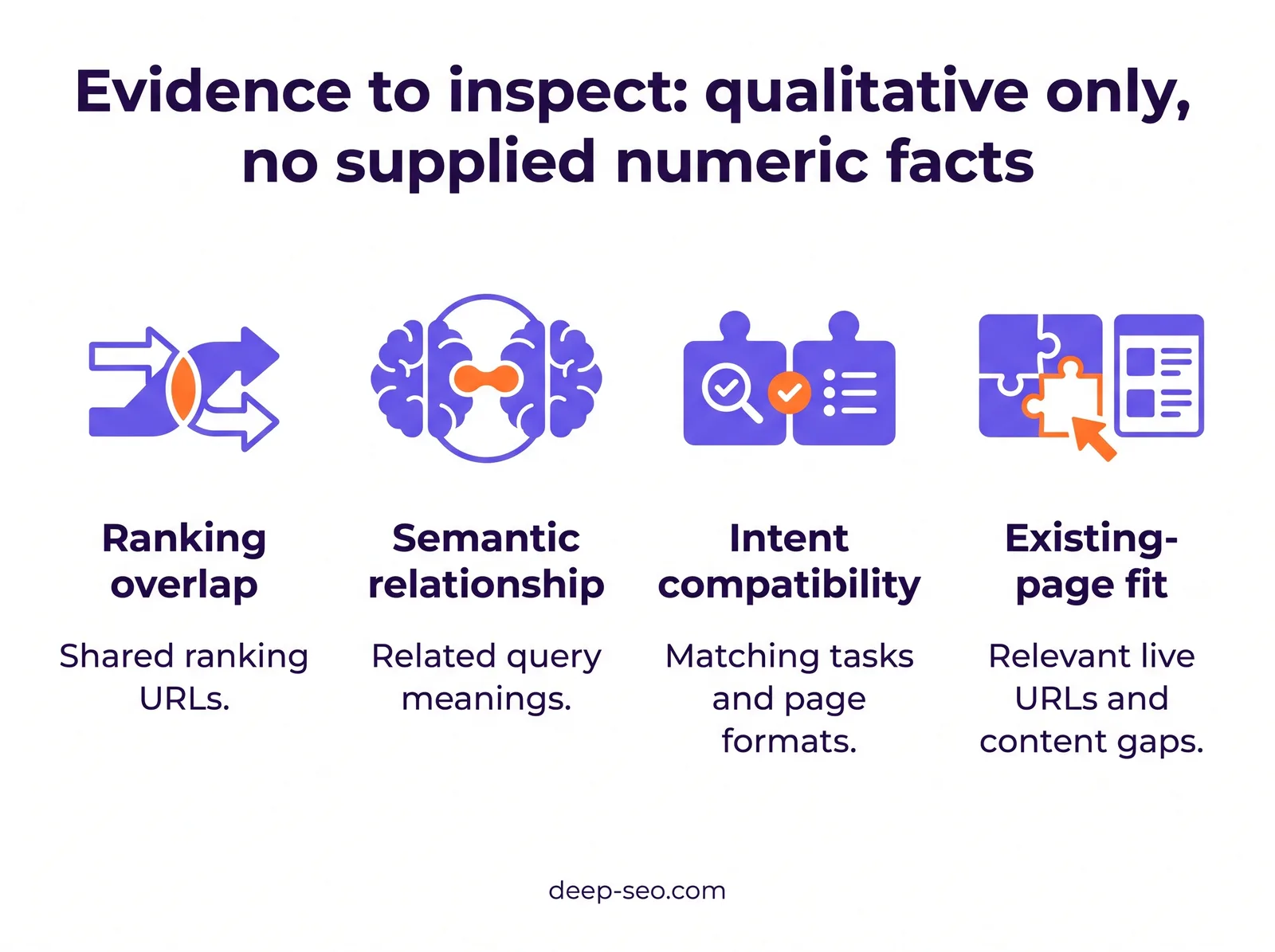
Keyword clustering groups search queries that may be served by the same page, but the method matters. SERP-overlap clustering compares shared ranking URLs; semantic keyword clustering compares meaning. Before you turn either output into a page plan, check search intent: do these queries belong together, or do they need separate pages? You can then map the groups to existing content and prioritize the work.
Each method gives you different evidence. SERP overlap shows where search results share pages, while embedding-based semantic clustering groups queries by meaning. Queries can sound related without a single page being able to serve them all.
For a cluster to be useful, you need a clear purpose and a suitable page type. Check your content inventory for an existing page to update or a gap to fill. You may also find pages competing for similar searches. These checks inform your content and internal linking decisions. For more about Deep SEO, explore our AI SEO platform hub.
What is keyword clustering, and why does it matter?
A keyword cluster is a provisional group of queries that one page could satisfy. Keyword clustering gives you a starting point for planning pages, not a final assignment. Related wording isn’t enough to put queries together: you still need to check search intent before you create or change content.
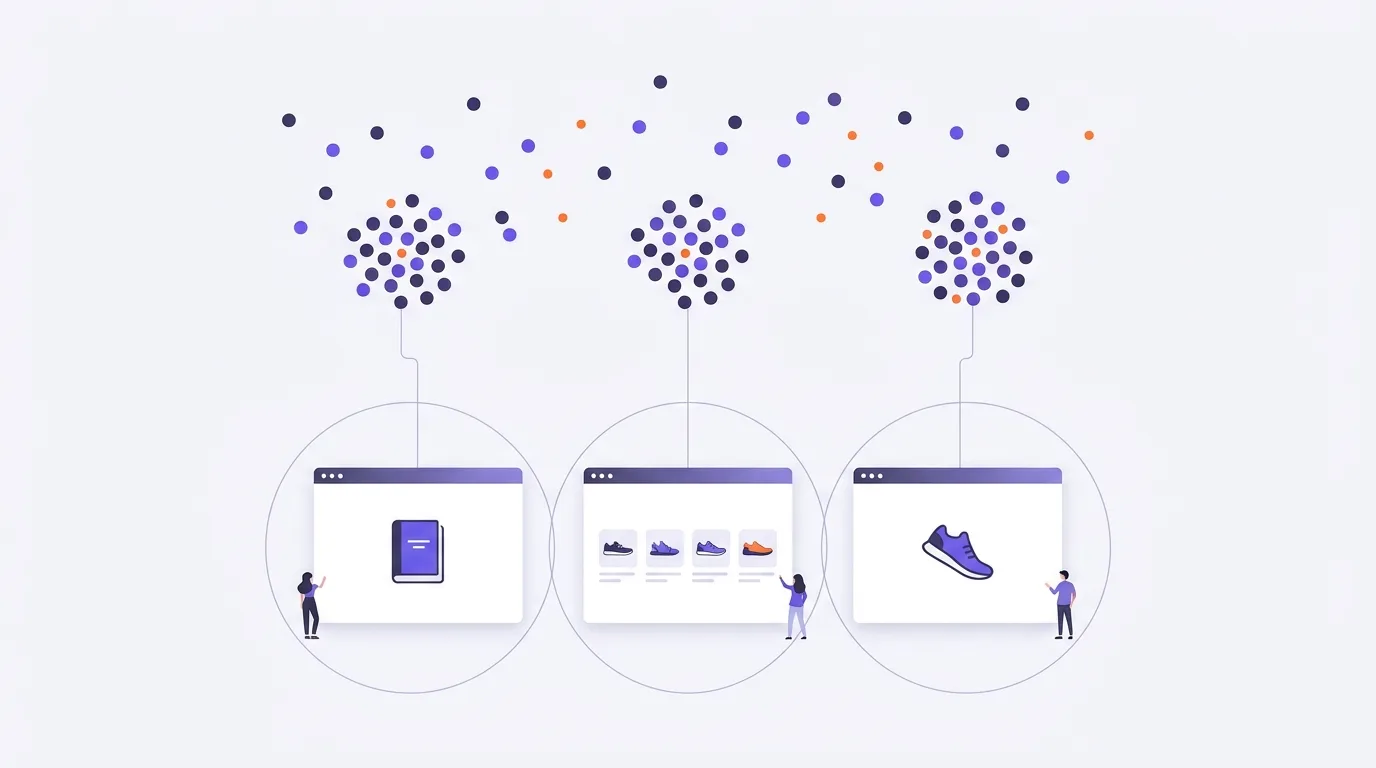
Keyword clusters and topic clusters have different scopes
A page-level keyword cluster supports a specific page and its purpose. A topic cluster is broader: it can cover several pages, each meeting a different need. You connect those pages with internal links rather than trying to fit every related query onto the same URL.
The difference comes down to what someone wants to do, not just the subject they’re searching for. Someone looking for advice may need an explanation. Someone choosing a product needs somewhere to compare or buy.
Example: a running-shoe shop
Say you run an online running-shoe shop. Your keyword list includes advice queries such as “how to choose running shoes” and category queries such as “trail running shoes”. You’ll have searches for individual shoe models, too.
All of these belong to the broad running-shoe topic cluster, but that doesn’t make them a good fit for one page. An advice guide serves a different purpose from a product category. Searches for a particular model have a different purpose again, suited to an individual product page.
Even the advice queries aren’t an automatic match. “How to choose running shoes” and “how should running shoes fit” might work in a shared guide, or they might need separate treatment. Keep that assignment provisional until you’ve checked intent and search results.
Move from a list to page assignments
Start by putting your keywords into provisional groups, then check each group against search intent and ranking URLs. Consider which page types are suitable, too. Split or merge groups where the evidence calls for it.
Once you’ve validated a cluster, assign it to an existing or planned page. The keyword-to-URL mapping described below turns that assignment into a usable page plan.
How does SERP keyword clustering work?
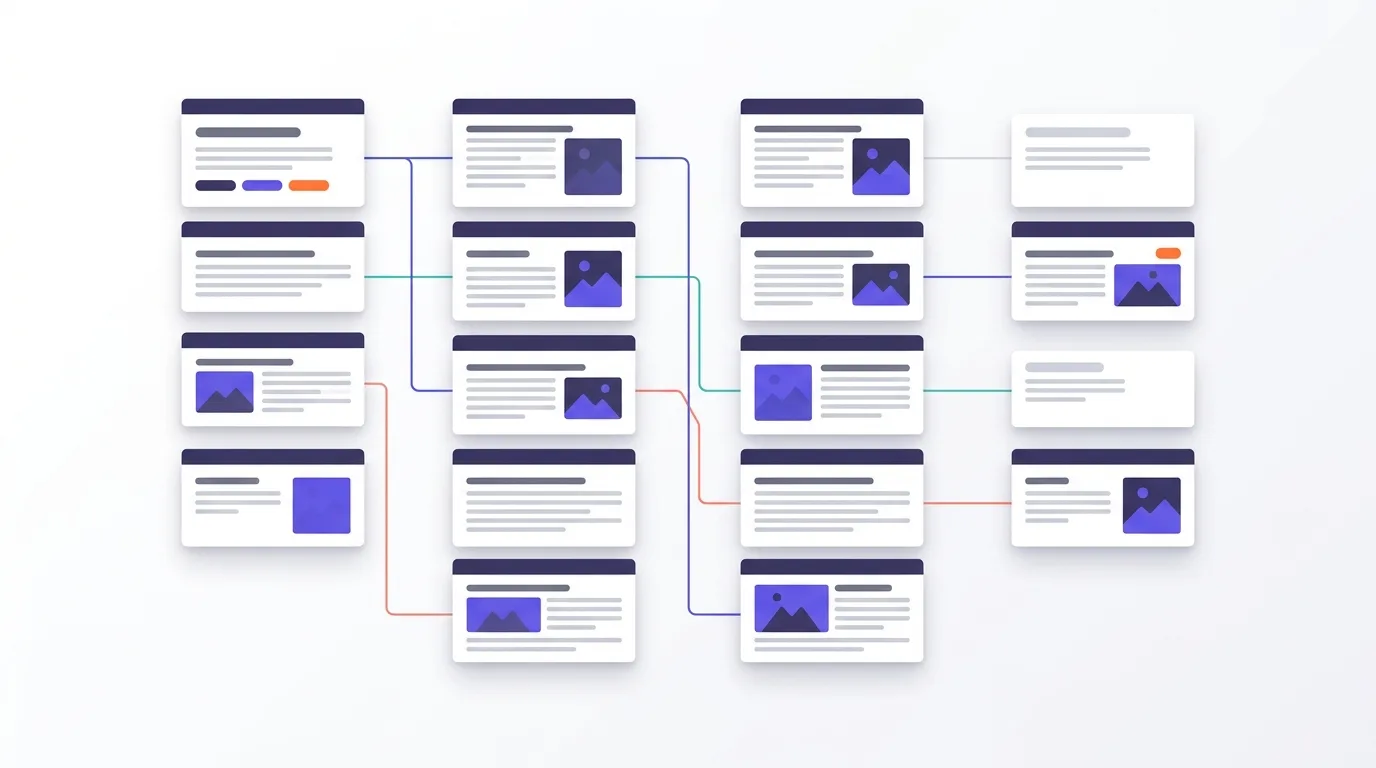
SERP keyword clustering compares the ranking URLs for different queries and groups them according to how much they overlap. Shared pages suggest that queries may belong on the same page, but you’ll still need to check intent: overlap alone doesn’t prove that every query fits the same cluster.
Search results can vary by location and search settings, so treat a SERP comparison as context-dependent evidence rather than a permanent page assignment. The workflow below is a practical way to make your comparisons repeatable, not a search-engine rule.
Make the comparison repeatable
Collect search engine results pages under consistent conditions, because changes in your setup can look like differences between queries. Record:
- The search market and language.
- Whether you’re checking mobile or desktop results.
- The result depth and which result types you include.
- The collection period, keeping searches close together.
Before you compare URLs, normalize them. Strip out tracking parameters that don’t change the page, but keep any that identify different content. You can then compare the ranking pages shared by each query pair.
Count matching URLs rather than matching domains. A furniture shop’s category page isn’t the same evidence as its buying guide. If different queries return those different pages, sharing a domain isn’t enough reason to combine them.
Work through a shared-URL comparison
Say you’re comparing “dining table size guide” with “dining table dimensions”. The table below is an illustrative comparison setup, not a report of live rankings. Each label stands for a distinct full URL in a result set collected at the same depth.
| Query | Ranking-URL set to compare |
|---|---|
| Dining table size guide | Size-guide URL; seating-chart URL; room-clearance URL |
| Dining table dimensions | Size-guide URL; seating-chart URL; table-category URL |
Calculate the intersection by keeping only URLs present in both sets: the size-guide URL and seating-chart URL. Exclude the room-clearance and table-category URLs because neither is shared. For an equal-depth comparison, you can express overlap as shared-URL count ÷ URL count in either result set. Other methods use different denominators, so make yours explicit before comparing scores.
In this setup, shared guides make up most of each set, which supports a provisional grouping around table sizing. You’d still open those guides to check whether they answer both queries. If “dining table dimensions” instead needs product specifications that the guides don’t cover, the shared URLs aren’t enough to settle the assignment.
Check the grouping logic, not just the overlap
Your overlap rule controls how readily queries join a cluster, but no universal threshold settles page structure for every topic. Keep the rule alongside your collection settings so another comparison uses the same basis.
Look at how the method builds groups, too. A query about sofa sizes might overlap with “sofa dimensions” through buying guides, while “sofa dimensions” overlaps with “sofa size calculator” through interactive pages. A chain-based method could pull those queries into a single group even though the endpoints need different page types.
Check whether those groups share a search intent. SERPs give you evidence of what’s ranking, not a verdict on page structure that’s permanent or infallible.
See the scaling section for checks when considering AI Keyword Planning or another commissioned plan.
How does semantic keyword clustering work?
Embedding-based semantic keyword clustering uses numerical representations of queries to compare their meaning. A clustering method groups similar representations, even when the wording differs. Those groups are candidates for review, not evidence that every query belongs on a single web page.

Take “couches for compact flats” and “sofas for small apartments”. The wording is different, but the meaning is shared, so embeddings can connect them without matching terms.
Meaning alone isn’t enough to assign a page. “Buy running shoes” and “how to choose running shoes” suggest different tasks: the buying query may need a category page, while the advice query may need a guide.
Review the boundaries before assigning pages
A term such as “jaguar” needs context that a short query may not provide. Your clustering settings matter here too. Looser similarity settings can merge distinct tasks; stricter settings can split groups that would be useful together.
As a practical page-planning check, treat semantic groups as candidates, then review search intent and search engine results pages before deciding which queries belong on a shared page.
SERP-overlap and semantic clustering use different evidence. Their limitations differ too, as does the validation each needs:
| Dimension | SERP-overlap clustering | Semantic clustering |
|---|---|---|
| Primary evidence | Shared ranking URLs across query results | Similarity between query representations |
| Main question | Do these queries return the same ranking pages? | Do these queries express related meanings? |
| Useful role | Testing whether queries may share a target page | Generating candidate groups from a keyword list |
| Important limitation | Results vary with search context and can contain mixed intent | Related meaning doesn’t establish the same intent or page type |
| Quality check | Inspect result formats, ambiguous members, and grouping consistency | Validate candidate groups against SERPs and the searcher’s task |
| Page-planning hand-off | Record evidence and confirm the preferred target URL | Confirm page boundaries before assigning a target URL |
How do you validate intent and choose one page or several?
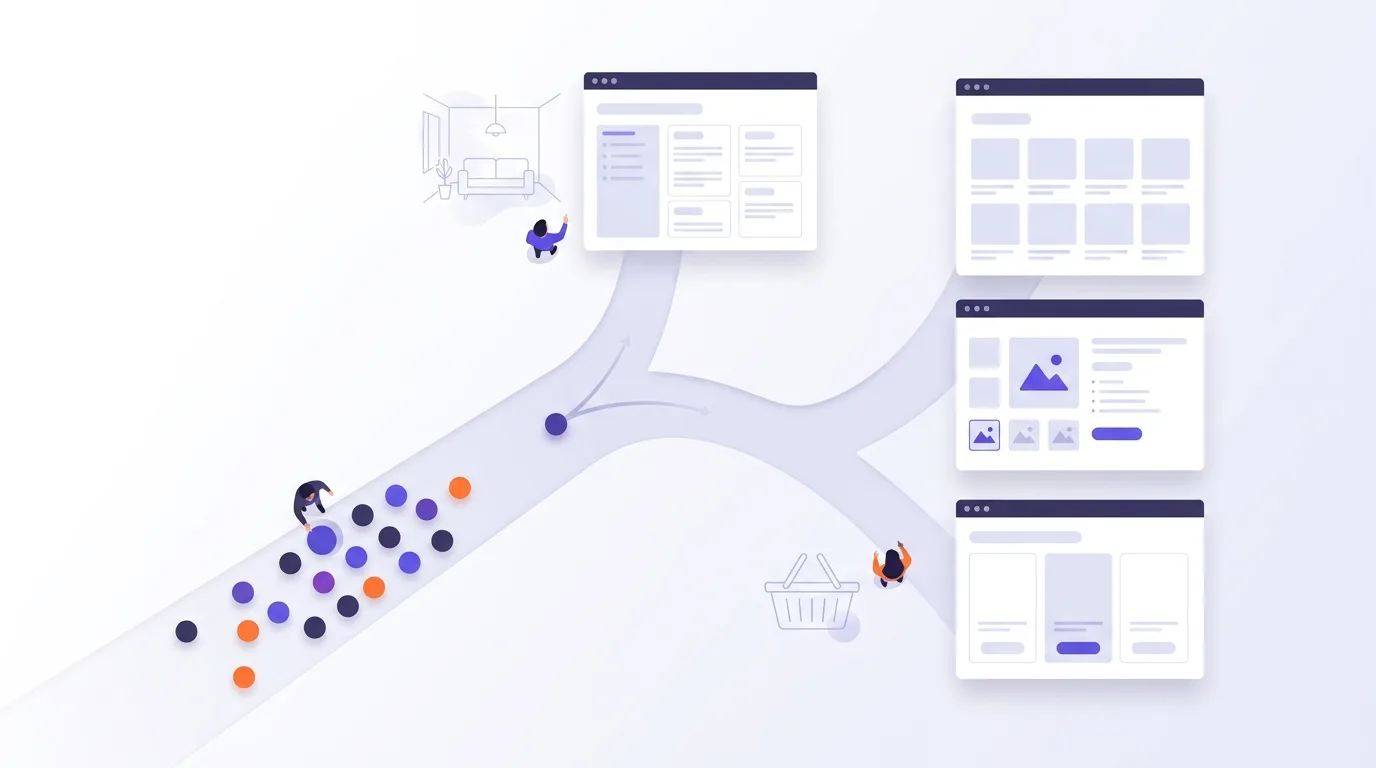
Validate a keyword cluster by checking what searchers want and which page formats rank for it. Look at representative queries as well as ambiguous members. Keep queries together if one coherent page can satisfy them; split them when they need materially different answers or experiences, not just different wording.
Check the task behind the query
For each representative query, pin down the searcher’s task and who you’re writing for. Then consider their conversion stage: someone learning how to choose a dining table needs different support from someone shopping for a specific model.
Look at the ranking URLs to see which page types the results favor:
- Guides
- Category pages
- Product pages
- Comparisons
You may find a mix rather than a dominant format. Open relevant pages, because titles alone won’t tell you what visitors can learn or do there.
Choose a page that serves a coherent purpose
Use one page when its main purpose naturally covers the cluster. A dining table size guide can address seating capacity and room clearance without becoming a different kind of page.
Queries need separating when combining them would force incompatible tasks or formats together. Buying dining tables from a product category is a different experience from reading a sizing guide, even when the queries share similar wording.
Mixed search engine results pages aren’t an automatic reason to split. They signal uncertainty. Check whether the formats serve different needs or whether individual pages answer the cluster well; if the evidence remains unclear, keep the grouping provisional.
Give the writer clear boundaries
Your validation should leave the writer with a shared task to address and a suitable page format. Explain any exclusions in plain language: “Cover table sizing and clearance here; leave product selection to the category page.” Carry that reasoning into the mapping below rather than maintaining a separate checklist.
Curious how your own site does? Run the free website check and RamradOS, our AI SEO assistant, picks it up from there. Start the free check →
How do you map keyword clusters to existing pages?
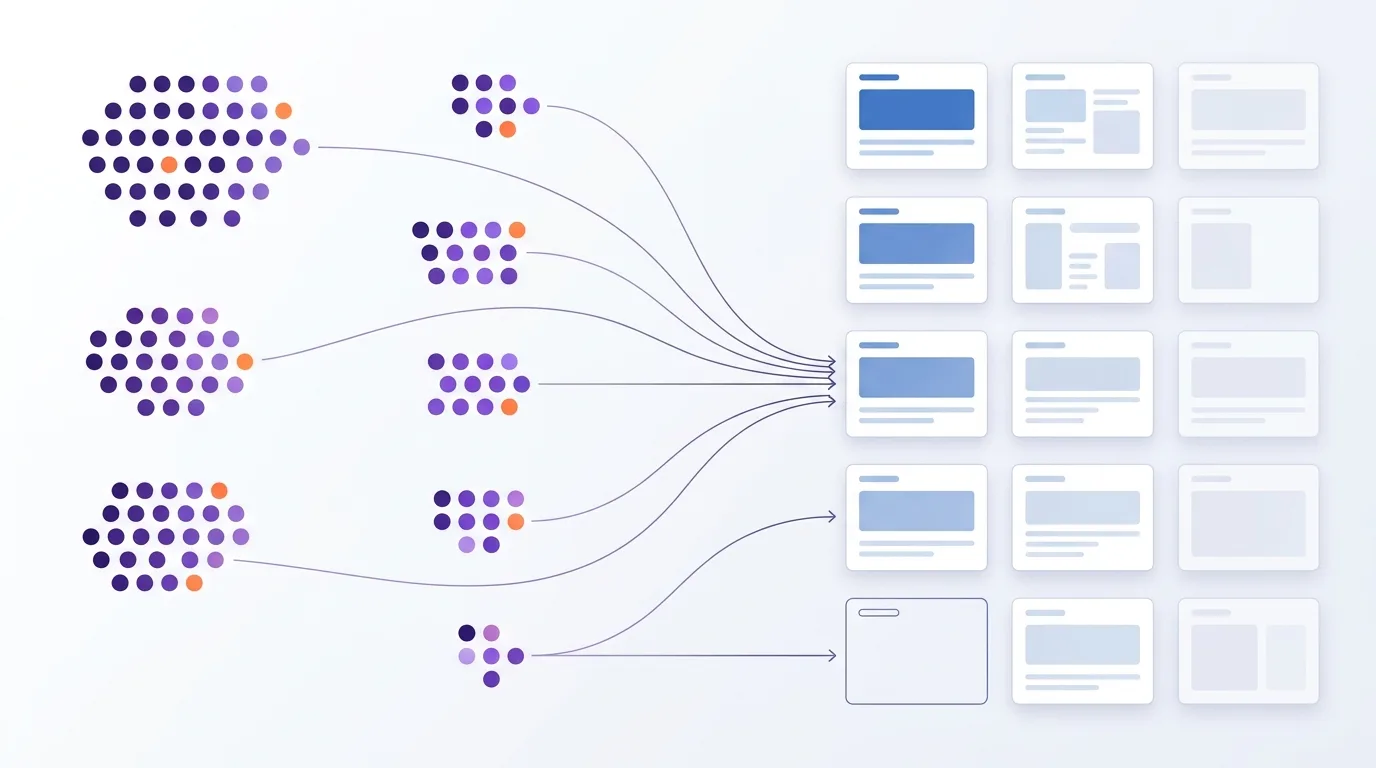
Map keyword clusters to existing pages by checking what each live page is there to do and whether its content answers the intended question. Use query-performance evidence to inform that decision. Assign a preferred URL where there’s a fit, then record an action and a plain-English reason for each mapping.
Check what your existing pages already serve
Build your content inventory around:
- Live URLs
- Titles
- Page types
- Each page’s main purpose
Don’t stop at the title: read the content to see whether it answers the searcher’s question. Mentioning a topic isn’t the same as covering it.
Check Google Search Console for the queries bringing impressions and clicks to each URL, but treat that evidence as context rather than an automatic assignment. Appearing for a query doesn’t prove a page serves the intended task, just as missing query data doesn’t prove you need a new page.
You can map several closely related subgroups to a page if they share a coherent purpose. A dining table size guide could cover seating capacity and room clearance because both support choosing a suitable size. Shopping for extendable tables may need a category page instead.
Give every mapping an explicit action
- Retain: Keep the existing page if its purpose and coverage fit.
- Update: Keep the existing URL and specify which content is missing or outdated.
- Consolidate: Combine overlapping pages if they serve the same task without offering distinct value.
- Create: Propose a new page if no suitable target exists.
- Investigate: Flag unclear intent or conflicting evidence before you assign a target.
Make the mapping readable
Record these details in your keyword-to-URL mapping:
- Cluster label
- Representative query
- Supporting queries
- Intent
- Page type
- Existing URL
- Proposed action
- Rationale, with supporting evidence and any unresolved questions
Mark the preferred target clearly. Where no suitable page exists, leave the existing URL blank.
Give the writer a reason they can check: “Update the sizing guide because these queries ask about fit, not products.” An opaque cluster label doesn’t explain the assignment well enough for a writer to understand the page’s scope or question a weak match.
How can keyword clusters reveal cannibalization?
Keyword clusters can flag possible cannibalization when multiple pages target substantially the same search task. Start with clusters mapped to more than one URL, then check whether each page has a distinct role. Shared keywords aren’t enough to establish a problem, and ranking URL changes don’t prove that pages are hurting each other’s performance.

Check the task each page serves
Your keyword-to-URL map gives you a starting point: clusters with competing target pages. Before treating them as a conflict, compare what the pages are for and what their content actually covers.
In Google Search Console, filter for the relevant queries and check which landing pages receive impressions and clicks over time. Does your preferred page appear consistently, or do the URLs change? A switch is worth investigating, but it isn’t a diagnosis. Search intent can be mixed, and visibility can shift for reasons other than competition between your pages.
Say you sell office chairs. Your category page and chair adjustment guide may share terms, but they serve different tasks and can complement each other. Similar buying guides are worth a closer look if you can’t identify a distinct audience or purpose for each.
Base your response on page roles
Where pages serve substantially the same task, decide what each should contribute before you change anything:
- Differentiate intent. Give each useful page a clear purpose, then align its title and content with that task.
- Strengthen internal linking. Use descriptive anchors to send readers to the appropriate page for the task they’re trying to complete.
- Improve the preferred page. Address gaps that make it less suited to the cluster’s intent.
- Consolidate redundant content. Combine genuinely overlapping material where separate pages don’t have a useful role.
A clustering output marking pages as similar isn’t a reason to delete or redirect them. Check the query evidence and what distinct value each page offers before taking either step.
See the scaling section for acceptance criteria for a commissioned plan from AI Keyword Planning or another provider.
Prioritize clusters and build a writer-ready page plan
Set priorities you can explain
Start with business relevance and audience need. Does the cluster support your offer and answer a useful customer question? Then weigh:

- Existing visibility
- Content gaps
- Implementation effort
- Confidence in the page assignment
Google Search Console can inform your visibility check, but missing query data isn’t proof of missing demand. If you’re still unsure which page should target the cluster, settle that before commissioning content.
Don’t treat summed keyword volumes as unique demand. Related queries can overlap, so adding their estimates can overstate the audience for a page.
Keep updates to existing pages separate from new-page work. An update may take less effort without being more valuable. Record dependencies as well, because consolidation may need to happen before expansion where proposed pages overlap.
Turn each assignment into a usable brief
A writer-ready row needs a clear page decision and boundaries. It should also explain why the page belongs at that point in the queue. Say you sell running shoes and lack a beginner buying guide. Your proposed row could look like this:
| Field | Example entry |
|---|---|
| Target URL or proposed slug | /guides/choose-running-shoes/ — proposed |
| Cluster | Choosing running shoes |
| Primary query | How to choose running shoes |
| Supporting queries | Choosing running shoes for beginners; what to look for in running shoes |
| Intent | Understand what to consider before buying |
| Page type | Buying guide |
| Angle | Help beginners choose by fit and running surface |
| Scope exclusions | No injury advice or individual shoe reviews |
| Internal links | Relevant running-shoe categories; fit guidance if available |
| Action | Create after confirming no existing guide fits |
| Priority rationale | Addresses a buying question; follows any required consolidation |
Publish in a defensible order
Use those rationales to order the work, resolving page conflicts before you commission briefs that depend on them. Schedule updates and new pages against available capacity. A score can help you sort the queue, but it doesn’t replace an explanation of why each page comes next.
How do you scale keyword clustering without skipping checks?
Automate repeatable work such as URL normalization and candidate grouping, but send uncertain page assignments for closer review. Use the keyword-to-URL mapping above as your working record.

Know where the manual work grows
As your keyword list grows, creating the groups is only part of the workload. Repeated SERP checks take time, especially when results mix page types, and ambiguous groups need closer review. Mapping gets harder when live pages have overlapping purposes.
Say your furniture shop’s candidate cluster includes “dining table size guide” and “dining table size calculator”, but your existing guide only explains measurements. Don’t brief a separate calculator page just because the tool split the queries, or add “calculator” to the guide’s title to force a match. Inspect the pages ranking for the calculator query: do visitors enter measurements and receive a recommendation, or read a sizing chart?
If an interactive answer is what the query calls for, the next decision is whether your team can build and maintain that tool. Until that’s settled, keep the calculator query under “Investigate” and let the guide update proceed only for the queries it can serve. Your mapping rationale can be as direct as: “Calculator query held back pending a format check and development decision.”
For service information, see Deep SEO’s AI Keyword Planning page; confirm the scope and deliverables before commissioning work.
Check what the delivered plan lets you decide
Whether you build the plan yourself or commission it, use these acceptance criteria:
- Traceable evidence: You can inspect the queries and ranking URLs behind each proposed target, alongside the evidence from live pages.
- Clear intent boundaries: The plan explains why queries belong together and where different search tasks require separate pages.
- Existing-page decisions: Each cluster identifies a suitable live URL or explains why new content is needed.
- Documented exceptions: Uncertain matches and possible cannibalization have a clear next step rather than a forced assignment.
- Actionable priorities: Each recommended page action has a reason for its priority and enough direction for implementation.
Before approving work, sample straightforward clusters as well as ambiguous ones. Can you follow the evidence through to the recommended page action? If not, ask for clarification before commissioning content.
Read more
Frequently asked questions
Should branded and non-branded keywords go in the same cluster?
Keep them separate in most cases. Someone searching for a brand often wants a specific company, product or website, while a non-branded search may be about broader research or comparison. Only combine them if the search results suggest one page can meet both intents. Matching words aren’t enough to justify a shared cluster, especially if the brand query leads to login or support pages.
Can you cluster keywords with low or missing search-volume data?
Yes—you don’t need search-volume data to decide whether keywords belong together. Volume helps you prioritise the work. Build provisional groups around meaning and search intent, then compare search results where they’re available. Your Search Console queries can give you more context, too. Where evidence is thin, leave the cluster provisional; missing volume isn’t proof that there’s no demand.
How often should you refresh keyword clusters?
Base your review schedule on how quickly your market and search results move. A product launch or a change to your services is a reason to revisit affected clusters. Recheck them when the pages appearing for your target queries shift, too. Stable topics may need less attention than seasonal ones, so you don’t need to rebuild everything just because part of a cluster has changed.
Should different languages or locations have separate keyword clusters?
Research languages separately: a translation doesn’t necessarily carry the same meaning or search intent. With locations, the decision depends on whether search results or customer needs differ. A local service query, for example, may need a different page from a national query. You can use meaning to spot possible relationships, but check the results in each target market before combining keywords.
What should you do with an outlier keyword that fits no cluster?
Resist putting it in the nearest group just to give it a home. Check the meaning and search results: is the phrase ambiguous or the topic irrelevant? It may instead reflect a distinct need. Keep relevant outliers for further research, since an existing page might accommodate one without a separate page being needed. If the keyword doesn’t fit your business, remove it from your plan.
Key takeaways
- Treat keyword clusters as draft decisions. Shared ranking URLs and semantic similarity give you evidence, not a substitute for checking intent.
- Use the search task to set page boundaries. Keep queries together if a page can answer them well; split them when users need different content or page types.
- Check your existing pages before adding more. Map each cluster to a suitable URL. If pages overlap, investigate before calling it keyword cannibalization.
- Give writers specific priorities and briefs. Record what each page needs to do:
- Audience need
- Business value
- Intended page type
- Internal links
Start with a manageable keyword group and compare it with your live content. Then record the action to take:
- Update
- Create
- Merge
- Investigate
See what this means for your website
Start with the free check. RamradOS explains the results and, if it fits, our AI Keyword Planning goes deeper.
Check your website free — in one minute
Our AI platform reviews your site and shows what to fix first. Our SEO team can implement it for you.