
Quick answer: Influencer marketing is collaboration with creators or subject specialists who can influence a relevant audience’s decisions. For SEO, it can support discovery, referral traffic, and opportunities for independent editorial coverage. It is not a shortcut to ranking authority: paid links need appropriate qualification, and audience engagement does not guarantee higher rankings.
Key facts
- Exchanging money, products, or services for links intended to manipulate rankings is link spam. Spam policies for Google web search
- Paid influencer links should use rel="sponsored"; Google also accepts rel="nofollow". Qualify your outbound links to Google
- Contracts must allow publishers to qualify required outbound links. Spam policies for Google web search
- Google recommends rel="sponsored" for affiliate links. A reminder on qualifying links and our link spam update
TL;DR: Choose creators for audience fit, brief them for useful and transparent content, qualify compensated links, and judge the partnership by business outcomes rather than promised ranking gains.
- Influencer marketing
- A collaboration with a creator or specialist whose audience relationships can influence awareness, consideration, or purchasing decisions.
- Creator brief
- An agreement on campaign goals, audience, deliverables, compensation, disclosures, usage rights, and measurement.
- Sponsored link
- A link arising from a paid placement or commercial relationship, appropriately identified to Google with rel="sponsored".
- Independent editorial link
- A link a publisher chooses to include without compensation or a contractual requirement to place it.
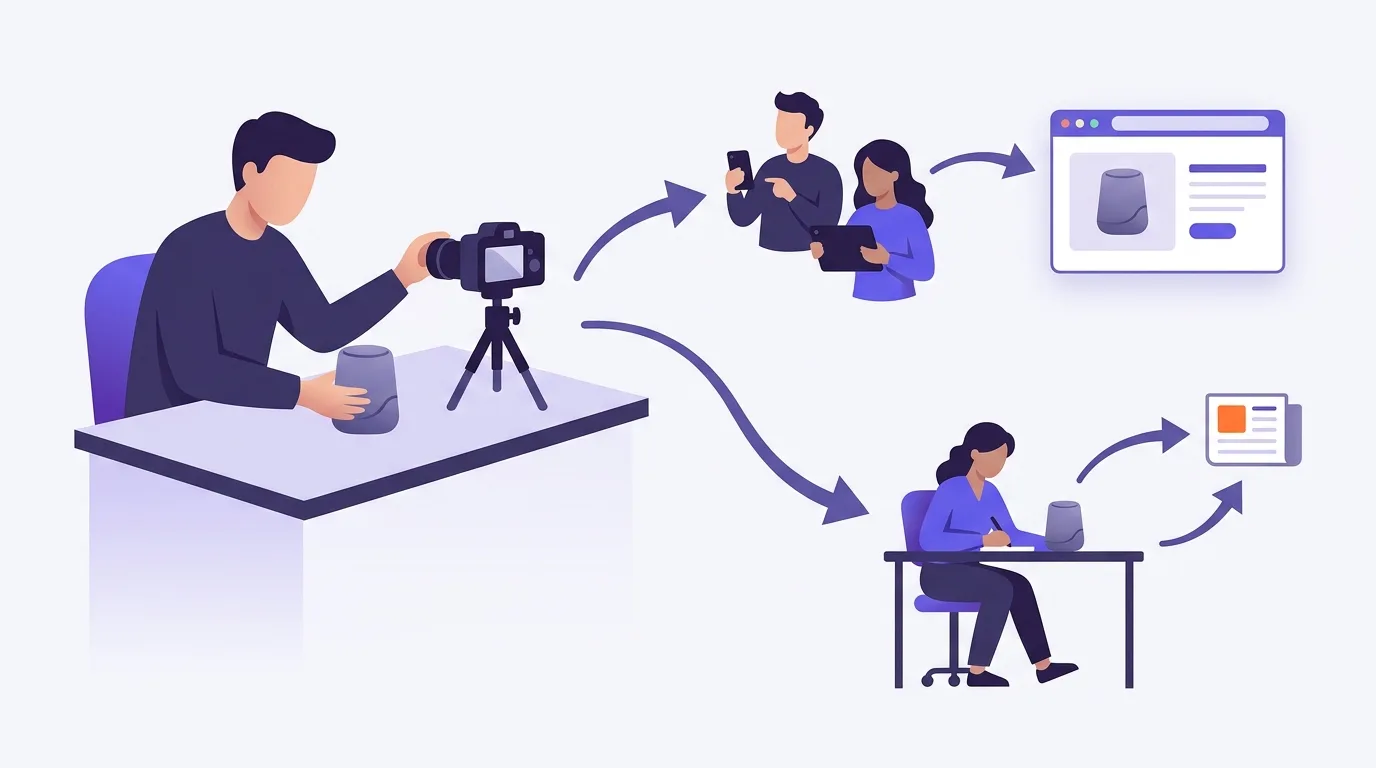
What is influencer marketing in an SEO strategy?
Influencer marketing is a partnership with a creator who introduces your brand or content to their audience. In an SEO strategy, it can help people find your site and give them a reason to visit. The fit between the audience and your offer matters more than follower count alone.
A specialist blogger may suit a technical product better than a broad lifestyle account. Look at what the creator knows and how their audience responds. Do people ask useful questions? Does the content address the same needs as your product?
Paid placements involve money or other benefits. Independent editorial links come from publishers who choose to cite your work without payment or a duty to link. See backlinks and link building for more on that distinction.
You don’t need creator partnerships to run an SEO campaign. Consider them when a creator can meet a clear audience need and support a business goal.
How can influencer marketing help SEO?
A relevant creator can introduce people to your brand and send interested visitors to your site. Some may later search for your brand. Publishers may discover a resource they want to cover. Any effect on search rankings is uncertain and needs separate evidence.
Separate creator visits from organic search traffic
A visit through a creator’s link is referral or campaign traffic. A visit through an unpaid search result is organic search traffic. Don’t count a click from a sponsored post as an organic search visit.
A useful product demo can give viewers a reason to explore your site beyond the item on screen. Social engagement alone, though, doesn’t establish a ranking benefit; see Social Media and SEO.
Use brand-mention monitoring to find references to your business and read them in context. If a publisher chooses to cover your work without a paid placement, that’s a separate route to exposure. Digital PR focuses on this kind of coverage and independent editorial links.
Choose creators for audience fit and credibility
Define the fit before searching
Turn your SEO strategy into a simple brief: who do you want to reach, and what would you like them to do?
Say you sell portable looms. A weaving creator who answers beginners’ questions may be a better fit than a large craft account whose audience rarely discusses weaving. Check whether the creator’s format can show the product in use and point viewers to a useful page.
Labels such as nano or micro don’t have fixed thresholds. A smaller audience isn’t always a better one.
Check credibility and audience evidence
Review recent work rather than relying on a media kit alone:
- Does the audience’s location match the market you serve?
- Do comments show real interest in the topic?
- How much of the channel is paid promotion?
- Can the creator share past campaign evidence relevant to your goal?
Ask for audience data, such as Instagram Insights when relevant. Tools like HypeAuditor or Upfluence may help you build a shortlist, but their estimates aren’t proof of audience quality.
Repeated comments or sudden audience growth deserve a closer look. Ask about them before drawing conclusions about fraud.
Build a creator brief around a useful deliverable
Match the format to the goal
Choose your main goal before the format. If you want leads, define what makes an enquiry useful to your sales team.
- Sponsored tutorials: teach a task and offer a next step.
- Product demos: show how the product works in practice.
- Honest reviews: explain who the product suits and where it falls short.
- Affiliate partnerships: link recommendations to a chance to buy.
Choose the format that suits the buyer’s question, not the one that offers the most backlinks.
Define the working terms
Write down what each party will provide:
- The content to be made and when it will go live.
- Payment or products supplied to the creator.
- The landing page and intended call to action.
- What you can approve and how you can reuse the content.
- Who handles ad disclosures and link checks.
- What reporting the creator will share.
Give the creator room to speak in their own voice. Don’t require a positive review.
Worked example
A weaving creator shows how to use a portable loom. They send interested viewers to your loom-selection guide rather than your homepage. Use a tagged campaign link so you can track those visits, subject to the disclosure and link rules below.
Measure visits to the guide and any resulting enquiries. Before paying for more content, check whether those enquiries came from people your product can serve.
You can use content promotion to share the work beyond the creator’s channel, within the agreed usage rights.
What disclosure and link requirements belong in the agreement?
Your agreement should assign responsibility for advertising disclosures and specify how paid links will be qualified for search engines. It must allow the publisher to qualify any required backlink. Ad disclosures explain the paid relationship to people; link attributes describe the link to search engines, so neither replaces the other.
Advertising disclosure and paid links
Check the advertising rules that apply to your campaign and the platform’s policies before publication. Use current guidance from the relevant regulator, and get legal advice if you’re unsure how it applies to your arrangement. Don’t assume a single hashtag meets every rule.
Google’s link guidance is separate from advertising law. For paid influencer links, use rel=”sponsored”. Google also accepts rel=”nofollow” to identify paid placements, as explained in its link-attribute guidance. See outbound link attributes for more context.
On a creator’s website, a paid link could look like this:
<a href=”https://example.com/” rel=”sponsored”>View product</a>
Google recommends rel=”sponsored” for affiliate links too, whether they’re added by hand or by software. See its affiliate-link guidance.
Gifting and contract limits
A free product supplied in exchange for a link is a paid benefit, not an independent editorial choice. Google treats exchanges of money or goods for links as link spam when the aim is to manipulate search rankings. That includes free products, under its link-spam policies.
Your contract must let the publisher qualify the link. Google prohibits requiring a backlink through a contract without allowing that choice, under the same spam policies. If a creator can’t edit link attributes, check how the platform handles them.
For broader risks and cleanup advice, see link spam, penalties and disavow.
Common mistakes that undermine creator partnerships
- Choosing reach over fit. A large following or high third-party authority score isn’t evidence of a ranking benefit. Look for an audience that has a reason to care about your offer.
- Buying ranking influence. See the disclosure and link requirements above and the broader link spam and penalties reference.
- Controlling the verdict. Give creators room for honest views rather than scripted praise. Agree on usage rights before you reuse their work.
- Confusing attention with value. Likes don’t prove commercial value. A ranking change during a campaign doesn’t prove the campaign caused it. Use SEO ROI and attribution to connect your report to business outcomes.
- Expecting coverage from every gift. Sending a product doesn’t ensure a post or an endorsement. Agree on a deliverable if you need one.
- Renewing without review. Check the value of the work before buying more. A familiar creator may no longer be the right fit.
Check delivery and measure business outcomes
Before you book another loom tutorial, find out whether the first one reached likely buyers. Start by checking the live post: weak traffic may reflect a broken link rather than poor audience fit.
Check delivery
- Read or watch the published content against the brief.
- Check the disclosure and link requirements above.
- Open the destination link and check that it reaches the right page.
- Test whether campaign tags survive any redirects.
Use a separate tagged link for each creator. A unique code may be useful too, though people can share codes outside the intended audience. Follow the campaign-tracking guidance when setting this up.
Compare outcomes
Record your starting point and campaign dates. Agree on the reporting window before launch so you don’t judge a long buying cycle too soon.
Compare the creator’s reported reach with visits to your site. Then look at the action you wanted, such as a qualified enquiry. Use Google Analytics 4 for tracked visits and key events, while keeping creator traffic separate from organic search.
Tracking won’t capture every journey. Consent choices can limit the data, and people may switch devices or share an untagged link.
Report independent editorial links apart from paid placements. Use Google Search Console to check search performance, but treat changes in branded searches as context rather than proof of cause.
If the loom guide drew relevant enquiries, weigh their value against the full cost of the partnership. If people visited but didn’t enquire, check the page and offer before blaming the creator. When the evidence is too thin to judge, say so rather than presenting reach as a business result.
Frequently asked questions
What is an influencer marketing company, and when should a business hire one?
It’s an agency that finds creators and manages partnerships for you. Consider one when your team lacks the time or skills to do that work. Ask how it checks audience fit and measures value. Before signing, make sure its fee is separate from creator payments and that someone owns the compliance checks.
Is influencer marketing worth testing for a small business with a limited budget?
It can be worth a small test if the creator reaches people likely to need your offer. Set a spending limit and a clear goal before you commit. Judge the test by useful outcomes, such as qualified enquiries, rather than follower count.
Can influencer marketing work for B2B companies?
It may suit B2B companies when an expert reaches the right business buyers. An interview or product demo can address questions buyers ask before they contact sales. Check the creator’s subject knowledge, then track relevant sales conversations rather than treating engagement as revenue.
Do influencers need their own website to be useful partners?
No. A focused newsletter or social account may suit your goal if you want audience reach. If you want website-based coverage, choose a creator who publishes relevant articles or reviews on a site, not just someone offering backlinks. For paid website links, follow the link requirements above.