
Quick answer: Outbound links are hyperlinks from your website to another website. They help readers verify claims, explore sources, and find useful context. For SEO, choose relevant destinations, use descriptive anchor text, and qualify paid or user-generated links appropriately. Linking to a reputable website does not automatically improve your rankings.
Key facts
- Relevant outbound links can support citations, context, and trustworthiness. Link best practices for Google
- Google specifies no ideal number of links per page. Link best practices for Google
- Ordinary editorial links do not need a rel attribute. Qualify your outbound links to Google
- Google prefers rel="sponsored" for paid placements; nofollow remains acceptable. Qualify your outbound links to Google
- Nofollow is a hint, not a guaranteed crawling or indexing block. Evolving "nofollow" – new ways to identify the nature of links
TL;DR: Add outbound links where they help readers verify or understand your content, qualify commercial and user-generated links correctly, and regularly check their destinations.
- Outbound link
- A hyperlink that takes a visitor from your website to another website, also called an external link.
- Anchor text
- The clickable wording of a link that describes its destination or purpose.
- Link qualification
- Using rel values such as sponsored, ugc, or nofollow to describe a link’s relationship to the linking page.
- Editorial link
- A link independently chosen by the publisher to support the content or help readers, rather than placed in exchange for compensation.
What is an outbound link?
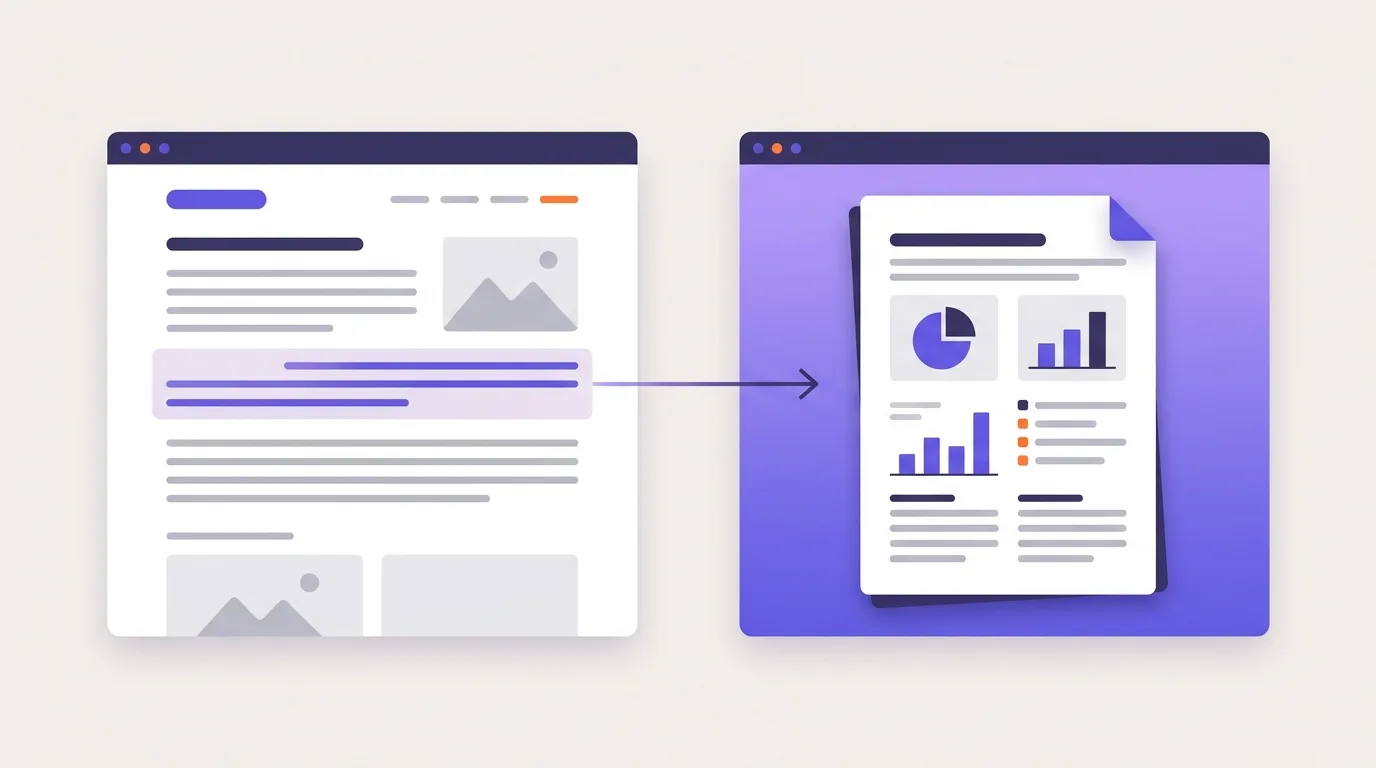
An outbound link is a hyperlink you publish on your website that leads to a different website. It gives readers a route to a reference, supporting evidence, or further reading. The term describes the link from your site’s perspective: your page is the starting point, and another site is the destination.
External links cross website boundaries. The term can describe links going in either direction, while outbound makes the direction explicit: away from the site publishing the link.
Editorial citations connect a statement to its source. For example, an SEO article could cite Google’s advice to use relevant outbound links to provide context and help establish trustworthiness by linking to Google Search Central’s link guidance. The linked words are the anchor text; the Google page is the destination.
Backlinks point in the opposite direction: another website publishes a link that leads to your site.
Internal links connect pages within your own website rather than sending readers to another site.
Why do outbound links matter for SEO?
Outbound links matter for SEO because they give readers access to evidence, useful background, and the sources behind your claims. Relevant citations make information easier to verify and help readers understand its context. These reader benefits do not mean that linking to a respected website automatically improves your rankings.
Google Search Central recommends relevant external links to cite sources, provide context, and help establish trustworthiness—not adding prestigious-domain links as a ranking trick (Google Search Central).
Make evidence easy to check
Editorial citations connect your statements to supporting material. They let readers inspect the evidence rather than rely only on your summary. A useful reference can also provide complementary information without forcing your page away from its main topic.
- Link to evidence readers can use to check a factual claim.
- Offer background that helps explain a complex point.
- Make clear which source supports which statement.
This supports source transparency, while E-E-A-T concerns broader content quality and trust, not a measurable score that rises with each citation.
Choose sources that support the exact claim
Source selection means checking whether an outbound destination supports the exact claim beside the link. Google recommends relevant external links for citations and context: Google Search Central.
- Relevance: Choose studies, statistics, or complementary information that directly address your point.
- Original evidence: Prefer original research, official documentation, or the source of a quoted statement when it supports the claim.
- Accountability: Look for an identifiable publisher or author. Government publications, academic research, and recognized organizations are possible sources, not automatic proof of accuracy.
- Applicable date or version: Check that the evidence fits the period or product discussed; content freshness means keeping information current and accurate.
- Accessible destination: Link to the specific supporting page, not the publisher’s homepage, and check that readers can access the evidence.
A domain extension, familiar brand, or third-party authority score does not establish accuracy. Inspect the actual destination.
Place citations beside the claims they support. Google sets no ideal link count: Google Search Central. Omit links that add no evidence, explanation, or useful next step.
Content optimization improves a page’s usefulness, including how well its claims are supported.
Build crawlable links with descriptive anchors
Crawlable outbound links use standard HTML and clear anchor text so search engines can follow them and readers know what to expect.
- Use a standard anchor. The HTML a element needs an href attribute containing a resolvable URL for Google to crawl the link reliably, according to Google Search Central.
<a href=”https://example.org/research”>original research findings</a>
This is a minimal ordinary citation.
Describe the destination naturally. Anchor text should be concise, relevant to both pages, and easy to read in context, as Google Search Central recommends. “Original research findings” describes the destination; “click here” does not. Avoid stuffed wording such as “research best research findings research study.” Favor accuracy over exact-match keywords. Meaningful link wording also supports web accessibility.
Keep ordinary editorial citations unqualified. They need no qualifying rel attribute, per Google Search Central; “dofollow” is an informal label, not a required attribute.
If scripts create or alter links, use the JavaScript SEO and rendering guide to troubleshoot whether the rendered page contains usable anchors.
When should you use sponsored, ugc, or nofollow?
The rel attribute describes a link’s relationship to your page. Use sponsored for paid or affiliate placements, ugc for user-submitted links, and consider nofollow for links you do not want to endorse. Independent editorial citations need no qualification, according to Google Search Central.
| Link type | Qualification |
|---|---|
| Independent editorial citation | None needed |
| Paid placement or affiliate links | sponsored preferred |
| User-submitted link | ugc recommended |
| Other links you do not endorse | Consider nofollow |
For paid links, nofollow remains acceptable, although Google prefers sponsored: Google Search Central. Do not apply nofollow to every external link merely because it leaves your site.
HTML examples
These values belong in the link’s rel attribute:
<a href=”https://example.com/offer” rel=”sponsored”>Partner offer</a>
<a href=”https://example.com/discussion” rel=”ugc”>Member discussion</a>
<a href=”https://example.com/resource” rel=”ugc nofollow”>Submitted resource</a>
What qualification does not do
These values are hints, not firm crawling or indexing barriers: Google Search Central. Destination-page indexing requires separate indexing controls.
Properly qualified paid placements differ from unqualified links sold to manipulate rankings, which Google classifies as link spam: Google Search Central. See link spam and penalties for policy risks.
Common outbound-link mistakes to avoid
Common outbound-link mistakes include arbitrary quotas, weak citations, blanket restrictions, and disruptive link behavior.
- Reject fixed quotas. Google sets no ideal link count: Google Search Central. Keep each link only if it helps readers. Unnecessary links can distract, but volume alone does not make them spam.
- Avoid authority by association. A famous website is not a useful citation unless it supports the claim. Do not promise ranking gains from linking to reputable sites.
- Avoid blanket nofollow. Ordinary editorial links need no rel attribute when no qualification applies: Google Search Central. Assess each link’s purpose instead.
- Do not force new tabs. For accessible link behavior, open new windows or tabs only when necessary and warn users beforehand, as advised by W3C. Do not claim this improves rankings or ensures readers stay.
- Avoid manipulative deals. Ranking-driven link sales and excessive reciprocal exchanges fall under link spam, as defined by Google Search Central.
Audit outbound links and measure their usefulness
An outbound-link audit checks whether external destinations still work, support nearby claims, and help readers.
- Inventory links. Use Screaming Frog SEO Spider or a comparable crawler to inspect external destinations and their source pages. Repeat periodically within your on-page SEO audit. Google Search Console is not a comprehensive broken-outbound-link checker.
- Inspect markup. Check for HTML a elements with resolvable href values and descriptive anchors, as Google Search Central recommends. Check rel values: prefer sponsored for paid links and ugc for user-submitted links, following Google’s guidance.
- Test destinations. Check response status and final destinations. Manually verify failures; automated requests can be blocked.
- Recheck evidence. Successful responses can contain outdated, unrelated, or repurposed content. Confirm each source still supports its nearby claim, consistent with Google’s citation guidance. Replace dead citations with equivalent evidence, revise the claim, or remove it—not substitute irrelevant sources.
Measure outbound clicks with Google Analytics 4; see setup details, but treat clicks as use, not proof of ranking impact.
For redirect implementation, see redirects and broken links.
The audit is complete when destinations are useful, anchors accurate, qualification appropriate, and citation failures resolved.
Frequently asked questions
Is it okay to link to a competitor’s website?
A competitor’s website can be a useful source, so yes—link to it when it helps readers. Google recommends relevant outbound links for citations and context (Google Search Central). Judge the specific page’s accuracy and usefulness, not just who owns it. Make the reason for the link clear in the surrounding text.
Can an outbound link point directly to a PDF?
An outbound link can point directly to a PDF hosted on another website. Use descriptive anchor text and label the destination as a PDF so readers know what to expect. Prefer the original publisher’s file over a copied version. If a landing page provides useful context or access options, consider linking there instead.
Does rel="sponsored" replace a visible affiliate disclosure?
The rel=”sponsored” attribute identifies a paid relationship to Google; it is not a visible disclosure for readers. Google prefers it for advertisements and paid placements (Google Search Central). Keep a clear, visible affiliate disclosure alongside the appropriate link attribute. Explain that you may earn a commission, and check the disclosure rules that apply to your audience and location.
Can I cite a source that is behind a paywall?
A paywalled source can support a citation, even when readers need a subscription to access it. Cite material you have actually checked, and tell readers that access may require payment. Include enough context for them to understand what the source supports. Where useful, add an accessible supporting source without suggesting it is the original.