
Quick answer: Backlinks are links from other websites to your pages; link building is the work of earning those links through useful resources, relevant outreach, and relationships. Search engines use links to discover pages and understand relevance. Effective link building prioritizes editorially chosen, contextually relevant links rather than volume or guaranteed ranking gains.
Key facts
- PageRank remains part of Google’s core ranking systems. A guide to Google Search ranking systems
- Google uses links to discover pages and assess relevance. Link best practices for Google
- Ordinary links do not need a special dofollow attribute. Qualify your outbound links to Google
- Nofollow, sponsored, and ugc are hints for ranking purposes, not absolute rules. Evolving "nofollow" – new ways to identify the nature of links
- Creating links primarily to manipulate rankings can constitute link spam. Spam policies for Google web search
TL;DR: Earn relevant, editorially chosen backlinks to useful pages, then evaluate their quality, referral value, and associated search performance rather than chasing link counts.
- Backlink
- A link on another website that points to a page on your website, also called an inbound link.
- Link building
- The process of earning links from other websites through relevant promotion, outreach, and relationships.
- Referring domain
- A website domain linking to your site, counted separately from the individual backlinks it supplies.
- Anchor text
- The clickable text of a link that gives readers and search engines context about its destination.
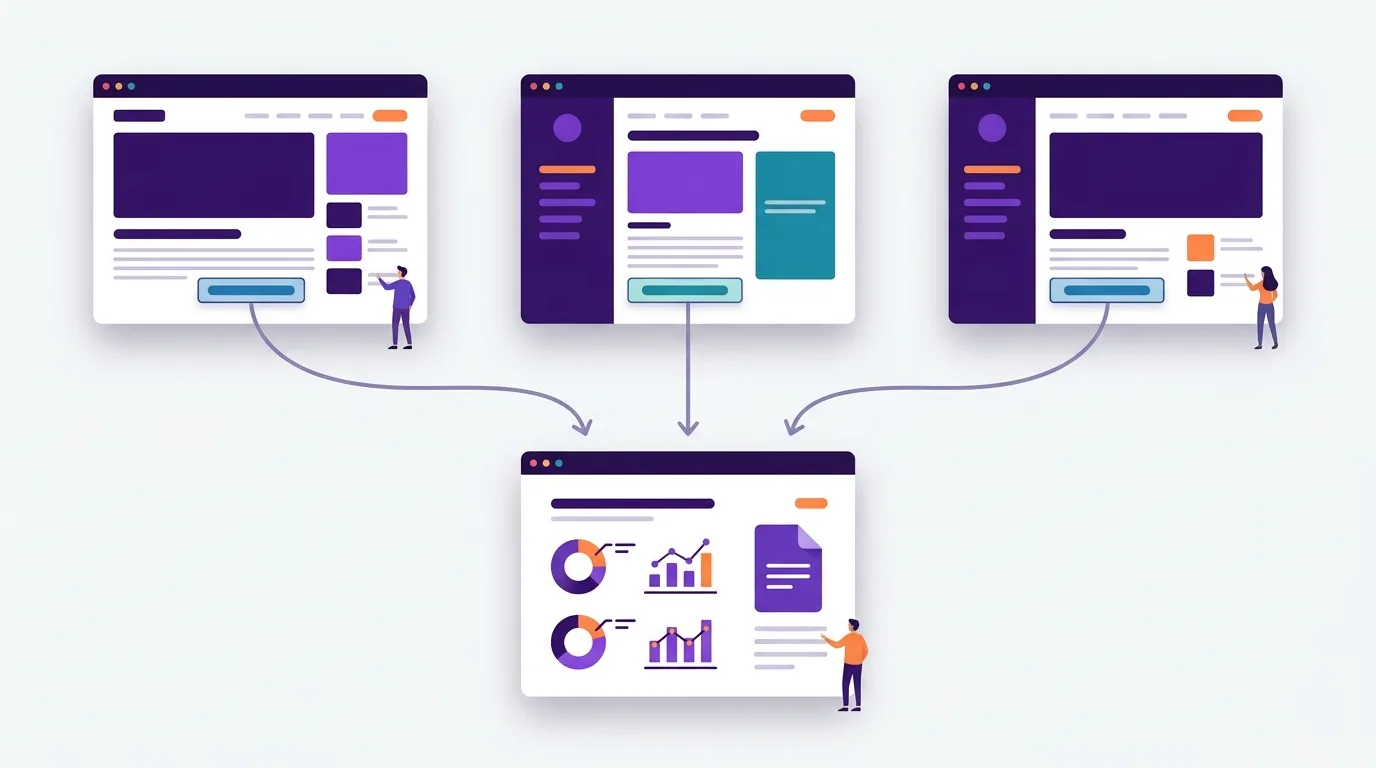
What are backlinks and link building?
Backlinks are links from other websites to your pages. Link building is the work of earning those links, often by sharing useful resources with relevant publishers. They’re not competing SEO techniques: one names the link itself; the other names the work used to earn it.
Say an industry publication cites a supplier’s research and links to the original report. The publication’s article is the source page, and the report is the destination page. The supplier has earned a backlink. If an editor chose that source to support the article, it’s an editorial link—not proof that the publication endorses everything the supplier does.
Backlinks connect individual pages, while referring domains are the websites those links come from. Several articles on the same publication can link to the supplier. Those are multiple backlinks from the same referring domain.
Link building is part of off-page SEO and link building. Managing links from your own site to other sites is a separate task.
Why do backlinks matter for SEO?
Google uses link analysis systems, including PageRank, to help it understand pages and their usefulness for queries (Google Search Central). That doesn’t establish what effect any single link might have on your rankings.
Search benefits and audience benefits
A backlink can serve different roles. Separate its possible search value from the visits it may bring.
| Potential benefit | What it means |
|---|---|
| Ranking support | Google’s link analysis systems help it assess pages and their usefulness. |
| Discovery | Google uses links to find pages and assess relevance, but a link doesn’t ensure that the destination will be indexed or rank higher (Google Search Central). |
| Referral traffic | People who click through from another website make referral visits, not organic-search visits. |
| Audience exposure | A mention with a link can introduce your resource to relevant readers, even without a click. |
Crawling, indexing, and ranking are separate stages of how search engines work. Backlinks are one input among many; they don’t replace useful content that answers the reader’s needs.
What makes a backlink worth pursuing?
Look for a link that fits the source page and gives its readers a reason to visit yours. The publisher should choose the citation because it’s useful, not just because you asked. Your destination page should then meet the reader’s need.
| Placement | Assessment |
|---|---|
| Industry resource page with a useful citation | Worth considering when your page answers a reader’s need. |
| Unrelated page selling placements | A weak topical fit; payment doesn’t make the link useful to readers. |
Check the live source page’s markup. Inspect the link in your browser’s developer tools. Google generally needs an HTML <a> element with an href attribute to reliably crawl a link. Check that the href points to the intended destination rather than assuming that clickable text is enough (Google’s crawlable-links guidance).
Where a link appears is separate from how it’s marked up. A link in a contributor article, for example, can still carry an attribute that tells Google more about the relationship.
- Ordinary links don’t need a special dofollow attribute.
- Google prefers rel=”sponsored” for paid placements, though it also accepts rel=”nofollow”.
- Google recommends rel=”ugc” for links in user-generated content, such as comments.
- Google treats sponsored, ugc, and nofollow as hints for ranking purposes.
These distinctions come from Google’s outbound-link guidance and its explanation of link attribute hints. For implementation, see outbound link attributes.
Domain Authority and Domain Rating are scores from third-party tools, not Google scores. You can use them to screen prospects, but they don’t establish the ranking value of a specific link.
Build a focused prospect list
Say you sell insulation and have published a test report on moisture resistance. A building publication’s article about damp walls may be a useful prospect if your report supports a point its readers need to check. A broad home-decor page with no discussion of insulation is a weaker fit, even if a tool gives its domain a higher score.
Start with the page you want cited and ask why an editor would use it. A longer article alone isn’t a reason to replace an existing source. Search for relevant publications or curated resource pages, then read the actual page before adding it to your list. Ahrefs or Semrush can help you find prospects, but neither is required.
Original research and useful guides can merit citations; see content-led link building for advice on creating resources worth citing.
Digital PR covers journalist outreach and media campaigns. Competitor link comparisons can supply more leads, but each still needs a page-level check.
Keep a working prospect sheet
Record enough detail to explain why each prospect belongs:
- Source URL
- Audience fit
- Suggested destination
- Specific reader benefit
- Contact details
- Outreach status
Make an editorially useful outreach request
Point the editor to the passage where your source could be useful, then explain what it adds. Share the exact destination and leave the decision with them.
For example: “Your guide explains how to compare insulation materials. Our test report includes the methods and limits behind the moisture-resistance results. Would you consider it as a source for that passage? Here’s the report if useful.”
Don’t demand a link or insist on specific anchor text. Requests for ranking credit aren’t an editorial reason to cite your page. Avoid generic mass messages and repeated unwanted follow-ups; a useful contribution gives an editor more reason to consider your request.
Record replies and placement outcomes in a simple log. Outreach tools are optional.
If a publisher’s old link points to a report you’ve moved, handle destination repairs and redirects before asking them to update it. That’s link reclamation: recovering an existing link. Asking a publisher to turn an unlinked brand mention into a citation is a request for a new link.
Common mistakes that distort link-building decisions
- Chasing volume. A count target with no link to audience fit can reward placements that offer readers little value.
- Copying competitors blindly. A competitor’s backlink is a lead to assess, not proof that the same placement suits your site.
- Trusting authority scores alone. Check relevance and editorial context as described above. An educational or government domain doesn’t automatically make a link valuable, either.
- Expecting automatic gains. Treat each new link as a citation to assess, not a certain ranking improvement.
Be wary of fixed anchor-text ratios and link-type quotas. A claimed “safe” pace of link acquisition doesn’t replace a review of how those links are earned.
Google defines link spam as creating links mainly to manipulate rankings. Its examples include:
- Buying links for ranking purposes
- Excessive link exchanges
- Automated link creation
- Low-quality directory links
See Google’s spam policies. Guest articles that inform readers aren’t discouraged, but large-scale article campaigns aimed mainly at building links can violate the policy (Google’s guest-article guidance).
Don’t make routine disavow decisions based only on a tool’s toxicity label. Use link-risk assessment and remediation to review the concern first.
How should you check and measure results?
Check whether placements stay live and whether new referring domains are relevant. Compare outcomes with a baseline recorded before outreach, rather than judging the work by raw backlink totals. Referral visits and useful actions on your site matter too.
The Google Search Console Links report and a third-party index, such as Ahrefs, can help you find reported links. Reports aren’t exhaustive, and their counts may differ. A tool’s discovery date isn’t necessarily the date the link was published.
Keep a placement log
Inspect important links directly and record what you find.
| Field | Record |
|---|---|
| Source page | Linking URL |
| Destination page | Linked URL |
| Referring domain | Source website |
| Placement context | Surrounding text |
| Observed link attributes | nofollow, sponsored, ugc, or none |
| First observed date | Discovery date |
| Status | Live or lost |
For referral visits and meaningful actions, use Google Analytics 4. Choose actions that matter to your business, such as an enquiry or a purchase.
Compare the destination page’s search trends with your baseline and link acquisition timeline. Record other changes to the site because timing alone doesn’t show that a backlink caused a change.
If you find substantial concerns, a broader off-page and backlink audit can help you assess them in context.
Frequently asked questions
How many backlinks does a new website need?
There’s no universal backlink target for a new website. Google’s description of its ranking systems explains the role of link analysis, but doesn’t set a quota for new sites (Google Search Central). Focus on relevant publishers that have a genuine reason to cite your content rather than working toward a raw count.
How long does it take for a new backlink to affect rankings?
There’s no fixed timetable, and a link may have no measurable effect. Google uses links to discover pages and assess relevance, but discovery alone doesn’t establish a ranking impact (Google Search Central). A ranking change after publication isn’t proof that the link caused it.
Can a page rank without backlinks?
A page may rank without external backlinks pointing directly to it, but that isn’t the same as having no links at all. Internal links may still connect it to pages elsewhere on your site. Google’s ranking-systems guide supports the narrower point that link analysis is one part of ranking; it doesn’t establish whether a particular page with no direct backlinks will rank (Google Search Central). Make the page accessible and useful for its intended search rather than treating a backlink count as a pass-or-fail test.
Should backlinks point to the homepage or individual pages?
Choose the page that best serves the reader. A mention of your business may fit the homepage, while a citation of your research usually belongs on the report itself. There’s no need to force a fixed split between homepage links and links to deeper pages.
Can you build backlinks without paying for SEO tools?
You don’t need paid SEO tools to find relevant publications. Use web searches to find prospects, then read their pages before contacting them with a useful source. A simple sheet can track prospects and replies. The important part is having a sound editorial reason for the link, not access to a paid tool.