
Quick answer: Local link building is the practice of earning links to a business website from pages relevant to its community or service area. Useful opportunities include local reporting, genuine partnerships, and community resources. Prioritize links that help local readers, rather than buying ranking credit or collecting large numbers of directory links.
Key facts
- Google uses links to discover pages and help assess page relevance. Link best practices for Google
- Links from low-quality directories can constitute link spam. Spam policies for Google web search
- Excessive link exchanges and pages created exclusively for cross-linking are link spam. Spam policies for Google web search
- Paid-placement links should use rel="sponsored"; rel="nofollow" is also acceptable. Qualify your outbound links to Google
TL;DR: Earn locally relevant links through genuine community contributions, ask for useful editorial links, and measure qualified referrals rather than chasing link counts.
- Local backlink
- An inbound link from a page with a meaningful connection to the business’s community, service area, or local audience.
- Referring domain
- A website that links to your site, counted separately from the individual links it provides.
- Editorial link
- A link a publisher independently chooses because it helps readers, rather than as a paid placement or required exchange.
- Link reclamation
- Recovering the usefulness of an existing backlink that points to a missing, outdated, or incorrect destination.
What is local link building?
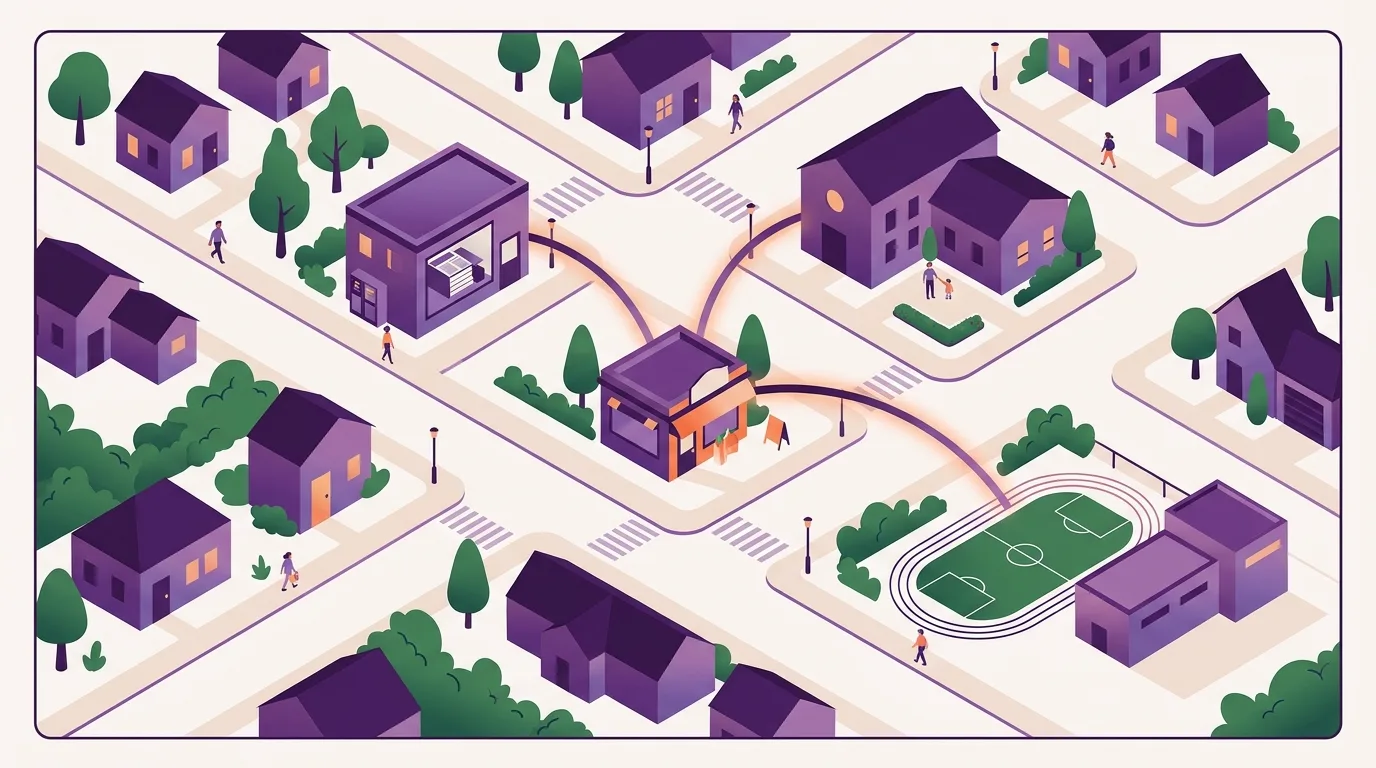
Local link building means earning links to your business website from pages that serve people in your area. What matters is who reads the page and why they’d visit your site—not where the publisher has an office. A useful local link gives readers a clear next step.
Local backlinks are a place-focused form of backlinks, which are links from other websites to yours.
Start with local news sites or community event pages. Check what each page offers its readers before you treat it as a good prospect.
Say you run a restaurant. A city food blog might link to your menu from its dining guide. A mention without a link isn’t a backlink. If you host a workshop, an event page could link to your booking page so residents can sign up.
A national news site’s regional page can serve local readers, too. A nearby website with unrelated content may be a poor fit.
Links give readers a way to click through to your site. Business citations record your business details but may not include a link; use the local citations guide for citation setup.
Why do locally relevant links matter?
Google uses links to find pages and help assess their relevance, as explained by Google Search Central. A local link can also give nearby readers a route to your site. Search benefits and visits from those readers are separate outcomes.
Potential search benefits
Search engines must find a page before they can assess it. The stages of crawling, indexing, and ranking are distinct. Earning a link doesn’t ensure that Google will index your page or rank it higher. Don’t treat a link as a sure route to higher Maps positions, either.
Third-party authority scores shouldn’t replace a check of reader relevance. Ask whether the linking page serves people in your area and whether your page meets their needs.
Google Business Profile management is a separate local-search task, not a substitute for earning useful local backlinks.
Referral traffic and community exposure
Referral traffic means visits from people who click a link on another website. A local article can send readers straight to your menu or booking page. It may also introduce your business to people who don’t click. Neither a mention nor a link proves that the publisher endorses your business.
Find and qualify local link prospects
Look for pages whose readers have a real reason to visit your site. A local address alone isn’t enough.
- Start with people and groups you know. Look at businesses you work with and events you take part in. A school or charity may be a good fit if you have a real connection.
- Search for specific pages. Try searches such as “[city] community events” or “[city] [industry] news.” Open each page rather than relying on a list of websites. Local awards may be worth a look if the judging process is clear, but a nomination doesn’t ensure a link.
- Check the fit. Does the page serve local readers? Is its content current, and would your link add something useful? Don’t accept or reject a site based only on a third-party authority score.
- Expand with care. Ahrefs or Semrush can help you find local pages that link to competitors. Use the backlink gap analysis workflow for the full comparison.
Keep a compact prospect sheet
Record why each page is a fit and what you need to do next. For a repair shop planning a local workshop, an entry could look like this:
| Source page | Audience and evidence | Relationship | Proposed destination | Contact | Placement conditions | Next action |
|---|---|---|---|---|---|---|
| Community center’s event calendar | Lists public workshops for nearby residents | Proposed workshop host | Workshop booking page with venue details | Calendar editor listed on the site | Check listing rules; a required return link is a warning | Confirm event eligibility before sending the booking link |
Record any fee or return-link request before you agree to a placement. For a broader review of links you already have, use an off-page and backlink audit.
Create a genuine reason for a local website to link
Before you contact a publisher, choose a page that its readers would want to open. If the page doesn’t answer a need, work on that first.
Match the opportunity to reader value
A repair shop that hosts a maintenance workshop has a clear reason to share its booking page. The page should tell residents what they’ll learn and how to attend. An event editor can then judge whether the link belongs in a listing.
A reporter may need a different kind of page: original information that supports a local story. Your local content should make that information easy to check and cite.
Digital PR involves pitching useful information for coverage that publishers choose on their own. It isn’t the same as sending out press releases in bulk.
Keep collaboration separate from paid placement
An editorial link is the publisher’s choice. A paid placement is part of a commercial deal. Be clear about which one you’re asking for.
You can work with a nearby business without making a link exchange part of the deal. Google lists excessive link exchanges and pages built only for cross-linking as link spam in its spam policies.
Support a school or charity because the work has value, not because you want its domain extension. For paid sponsorship links, follow the paid-placement guidance below.
Ask for useful links and recover broken local references
If a local page already mentions your business, check whether a link would make it more useful. If it has a broken link to your site, offer a page that meets the same need.
Ask for a useful addition
Keep your request tied to the page you’ve read:
- Identify the page and the relevant mention.
- Explain your connection to the local event or topic.
- Show how your page helps readers.
- Leave the choice to add a link with the publisher.
For example: “Your event listing mentions our workshop at the community center. Our registration page lets readers check availability and book. If helpful, could you add a registration link beside the listing?”
Link to the page that meets the reader’s need, not always your homepage. Google recommends clear, concise link text without forced keywords, as explained by Google Search Central. Leave the wording to the publisher. Don’t demand a city-plus-service phrase or keep chasing an editor who hasn’t replied.
Recover broken local references
Check backlink reports for local links that lead to pages you’ve removed. Ask the site owner to update the link only if you have a page that serves the same purpose.
For the technical work, see redirects and broken links.
If the page itself needs work, see on-page SEO for local pages.
Avoid local link-building tactics that create spam risk
Pass on a placement if its main purpose is to manipulate search rankings. That’s how Google defines link spam. A local audience doesn’t make a spam tactic safe.
Recognize manipulative placements
Don’t submit your site to low-quality directories just to add links. Google lists those links as spam in its spam policies.
For link-exchange risks, use the collaboration guidance above.
Forced keyword-rich link text is another warning. Google flags optimized anchors in guest posts and other articles sent to outside sites, including press releases, in its link spam guidance.
Qualify paid placements
Ask publishers to mark advertising and paid links with rel=”sponsored”. Google also accepts rel=”nofollow”, according to its paid-link guidance. Apply this rule to local sponsorships as well.
Don’t present a link bought with a free product as an earned endorsement. Avoid trading positive testimonials for links.
Separate promotion from editorial links
A social shoutout or forum signature isn’t the same as a link chosen by an editor. See social media and SEO for that distinction. A guest article isn’t automatically a useful SEO link, either; check the page and its purpose.
If you need to address harmful links, use the guidance on link spam, penalties, and disavow.
How do you check local links and measure results?
Check that each live link works and makes sense for its readers. Then track what happens after publication. A rising link count alone won’t tell you whether the work is useful.
Check the live placement
- Open the link and check that it leads to the right page.
- Read the text around it to check that the link fits.
- Inspect the HTML. For reliable crawling, Google generally needs an a element with an href that points to a web address it can resolve, explains Google Search Central.
- Check paid links against the paid-placement guidance above.
A crawlable link doesn’t ensure that Google will index the page or give the link ranking credit. A paid link marked as sponsored can still bring readers to your site.
Log placements and outcomes
Keep a record of each placement:
- Source page URL and destination URL
- Why the page serves local readers
- Whether the link was earned or paid
- Whether the link is still live
- Referral visits and tracked inquiries
Use backlink tools or direct checks to see which links remain live. Review broader patterns through an off-page and backlink audit.
Use Google Analytics 4 to assess referral visits and tracked inquiries; follow the analytics setup guidance.
Put reader fit and business outcomes ahead of raw link totals. A ranking change doesn’t prove that a specific link caused it. Use local SEO reporting to track wider search trends alongside other changes to your site.
Frequently asked questions
How many local backlinks does a small business need?
There’s no single target that suits every small business. Focus on links that serve local readers rather than a quota. Google uses links to find pages and assess relevance, as explained by Google Search Central. A link count doesn’t tell you how useful those pages are.
How long does local link building take to produce results?
There’s no fixed timetable. Publishers need time to decide whether to add a link, and search engines may not find it right away. A published link doesn’t mean rankings will change. Track referral visits and inquiries over time, and record other site changes that could affect them.
Can a service-area business earn local links without a public storefront?
Yes. You don’t need a shop that customers can walk into. Look for coverage tied to work you do in the area, or offer expert comments to local reporters. Base your outreach on the places you truly serve, not an invented office address.
Can local link building be done without buying SEO tools?
Yes. You can find local news sites and community groups through web searches. Keep your contacts and link status in a spreadsheet. Check each page for a real audience before you reach out. Avoid low-quality directories, whose links appear in Google’s examples of link spam.